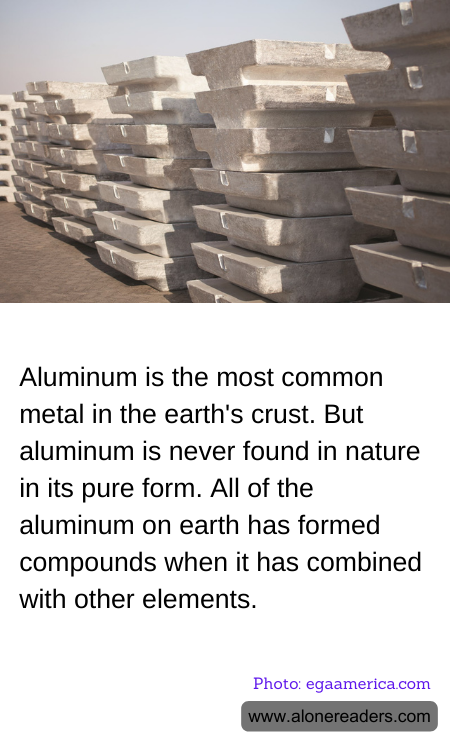
Aluminum, despite being the most abundant metal in the Earth's crust, is never found in its pure, metallic form naturally. This lightweight yet strong metal forms only when it bonds with other elements, most commonly oxygen and silicon, creating a range of minerals and ores rather than existing independently. The primary source of aluminum is bauxite ore, which contains aluminum oxide. This metal’s prevalence and useful properties have made it essential in various industries, from aerospace to packaging.
The process of extracting aluminum from bauxite involves several steps, the most significant being the Bayer process, which refines bauxite to alumina (aluminum oxide), and the Hall-Héroult process, which further smelts alumina to produce pure aluminum metal. This multistep refinement is necessary because aluminum's high affinity for oxygen makes it extremely rare in its free form. Once extracted, aluminum exhibits a remarkable array of properties such as corrosion resistance, ductility, and excellent conductivity, enhancing its utility across various domains.
Moreover, aluminum is notable for its sustainability. Being 100% recyclable without loss of its natural qualities, it provides substantial ecological benefits. Recycling aluminum saves around 95% of the energy needed to produce it from raw materials, significantly reducing the carbon footprint associated with its production. This aspect of aluminum's life cycle has encouraged its extensive use and recycling efforts globally, contributing to sustainable development initiatives.
Thus, while aluminum's natural occurrence in the Earth’s crust as a pure metal might be impossible, its derived form has immense applications and advantages. Its comprehensive utilization and recycling practices underline aluminum's irreplaceable role in modern technology and environmental conservation.
