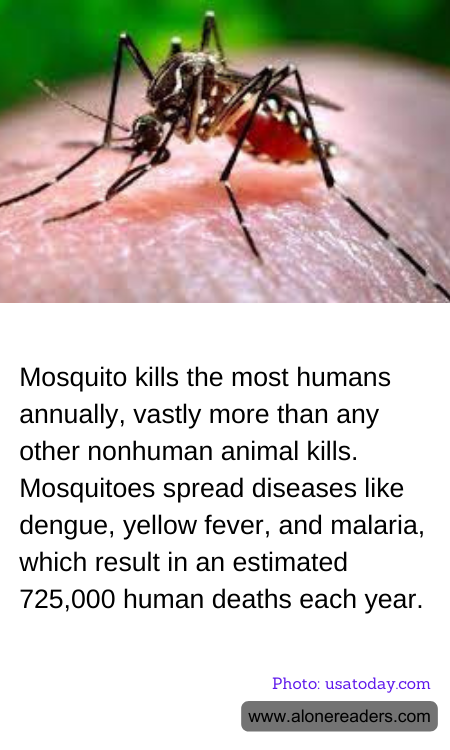
Mosquitoes are recognized as one of the deadliest animals on the planet, not because of their size or the direct harm they cause, but because of their ability to transmit several deadly diseases. They act as vectors for some of the world's most debilitating illnesses, including dengue fever, yellow fever, and malaria. These diseases lead to an estimated 725,000 deaths annually, a staggering number that surpasses the fatalities caused by larger and more typically feared animals like sharks, lions, or crocodiles.
Malaria, for instance, is primarily spread by the Anopheles mosquito. When this mosquito bites a person, it can transmit the Plasmodium parasite, which multiplies in the liver before invading red blood cells, leading to symptoms ranging from mild sickness to severe neurological complications or death. The World Health Organization reports that in 2019, there were approximately 229 million cases of malaria worldwide, with the disease leading to over 400,000 deaths, mostly among children in sub-Saharan Africa.
Similarly, dengue fever, transmitted through the Aedes aegypti mosquito, poses a significant health risk in over 120 countries, especially in tropical and sub-tropical climates. It is estimated to infect about 400 million people yearly, leading to severe flu-like symptoms that can be fatal.
Efforts to control the mosquito population and limit the spread of these diseases include the use of insecticide-treated netting, indoor spraying with insecticides, and personal protection measures such as the use of mosquito repellent. Researchers are also working on more innovative strategies, such as genetically modifying mosquitoes to reduce their population or their capability to transmit diseases.
Despite these efforts, the battle against mosquito-borne diseases faces several challenges, including the insects' growing resistance to insecticides and the lack of effective vaccines for diseases like dengue. Climate change also threatens to compound these challenges by expanding the habitats suitable for mosquito populations, potentially introducing these diseases to previously unaffected areas. As such, mosquitos continue to pose a significant threat to global health, requiring ongoing efforts in science, public health, and community participation to manage and ultimately reduce the risks associated with these deadly vectors.
