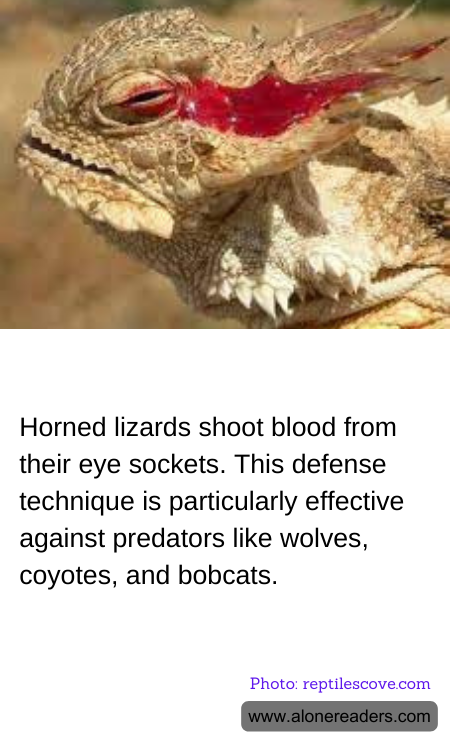
Horned lizards, often known as "horny toads," possess one of the animal kingdom’s most bizarre defensive mechanisms: they can shoot streams of blood from their eye sockets. This startling ability is specifically used to ward off predators such as wolves, coyotes, and bobcats. Horned lizards, native to the deserts and arid regions of North and Central America, have evolved this and other unique traits to survive in challenging environments characterized by sparse water, extreme temperatures, and numerous predators.
The blood-shooting mechanism is both a startling visual distraction and a chemical deterrent. When threatened, the horned lizard increases the blood pressure in the sinuses around its eyes, which causes small blood vessels in the orbital sinus to rupture. As a result, the lizard can squirt blood up to a distance of five feet—a shocking sight intended to confuse or temporarily distract predators, giving the lizard a chance to escape. The blood contains a chemical that is foul-tasting to canine and feline predators, adding an additional deterrent beyond the initial shock of the display.
This form of defense is generally used as a last resort, primarily because it involves the loss of up to one-third of the lizard’s total blood volume, which can be risky. Prior to reaching this critical juncture, horned lizards often employ other tactics such as camouflage, flattening their bodies against the ground to reduce their shadow and remain unobserved, and, if noticed, fleeing swiftly to rocky crevices or thorny vegetation where predators cannot easily follow.
What makes horned lizards particularly fascinating is not just their unusual defense mechanism but how it fits into their overall survival strategy in a hostile environment. Their diet mainly consists of ants, providing them with the moisture necessary to sustain life in arid regions, and their coloration usually matches the soil or sand, aiding in camouflage.
This adaptive strategy underscores the complex interconnections in ecosystems and the evolutionary paths that organisms can take to safeguard their existence in the natural world. Each feature of the horned lizard, from its diet to its dramatic defensive tactics, is a testament to the resilience of life and the enduring struggle to survive in the face of natural threats, making it a captivating subject of study in the field of biology.
