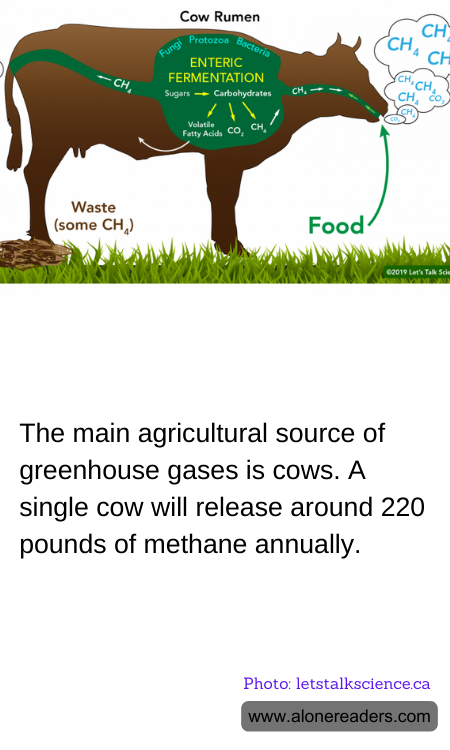
Livestock farming, particularly involving cows, plays a significant role in the production of greenhouse gases, which are critical factors in global warming and climate change. Among these gases, methane is notably potent, having a global warming potential approximately 28 times greater than that of carbon dioxide over a 100-year period. A typical cow can emit about 220 pounds of methane per year through belching, as part of their normal digestive process known as enteric fermentation.
The issue is compounded by the sheer number of cattle globally, which stands in the billions. When these emissions are scaled up to include all cattle, the methane contribution to the Earth’s atmospheric composition becomes substantial. Moreover, other aspects of animal agriculture contribute to greenhouse emissions, such as manure management which also produces methane when broken down anaerobically, and nitrous oxide, another potent greenhouse gas produced by the decomposition of livestock manure and the use of fertilizers in feed crop production.
Furthermore, the land-use changes required to accommodate livestock—notably deforestation to expand pastures and grow feed crops—further accelerate carbon emissions. Trees, which absorb carbon dioxide, are cut down, diminishing the Earth’s capacity to absorb the increasing atmospheric carbon dioxide levels. The reduction in forested areas not only limits carbon sequestration but also affects biodiversity and the ecological balance.
Addressing this issue is complex and requires a multifaceted approach. One potential strategy is improving farming practices to increase efficiency and reduce emissions. This can involve dietary supplements to reduce methane production in ruminants, better manure management practices, and more sustainable land usage methods. Additionally, there is a growing interest in alternative proteins and diet shifts away from meat, which could decrease the demand for livestock farming and its associated environmental impacts.
Technological innovations, such as methane inhibitors and genetic modifications aimed at reducing methane emissions by altering the digestion processes of cows, are also under research and could present viable mitigation strategies. Moreover, international policies and regulatory frameworks that encourage sustainable practices and penalize high emissions can be crucial in managing the agricultural impact on climate change. Evidently, while the contribution of cows to global greenhouse gas emissions is substantial, there are myriad paths forward that could mitigate their environmental hoofprint.
