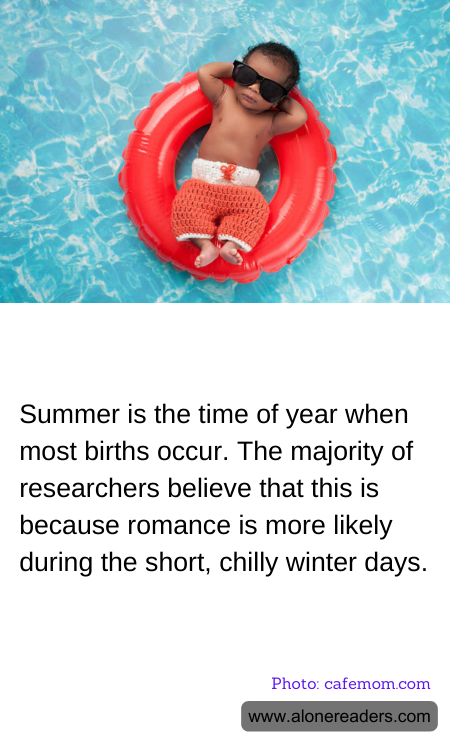
The phenomenon of summer babies has intrigued sociologists and demographers for years. It's a noticeable trend: birth rates spike during late summer months, suggesting a higher conception rate in winter. This pattern has led researchers to explore the underlying causes, with many pointing to the romantic tendencies that seem to flourish during winter's shorter, colder days.
Why do cold, dreary winters lead to an increase in summer births? One theory is rooted in human biology. Decreased daylight triggers an increase in melatonin, a hormone that regulates sleep and is linked to reproduction. This increase could enhance fertility and increase the chances of conception. Simultaneously, winter's challenging weather conditions often lead to individuals spending more time indoors, potentially leading to closer intimacy and increased opportunities for conception.
Social behaviors also contribute significantly. Holidays and celebrations are abundant in winter, providing societal cues for romance and closeness. These gatherings can foster intimacy, which, in turn, leads to higher rates of conception. Emotional warmth and a need for companionship during colder, darker days could psychologically enhance relationships, further increasing intimacy.
Moreover, the end of the year often prompts reflection and a reevaluation of personal goals and desires. For many, this might be a time for making critical life decisions, such as choosing to start or expand a family. The festive atmosphere of the holiday season, combined with the beginning of a new year, provides a hopeful, auspicious setting for such significant choices.
Economically speaking, winter might also seem a practical time to conceive for those aiming for a summer birth. Maternity and paternity leaves aligned with summer could offer logistical benefits, such as avoiding major work projects, coinciding with school holidays, and utilizing good weather for post-birth recovery and bonding.
Despite these factors, it's important to approach these trends with an understanding that they can vary widely across cultures and regions. Different societal norms, economic conditions, and even climate variations can influence when people choose to have children. Thus, while the winter romance theory is compelling and backed by various observations and studies, it's one of multiple factors contributing to why summer often wins the badge as the “season of births.”
