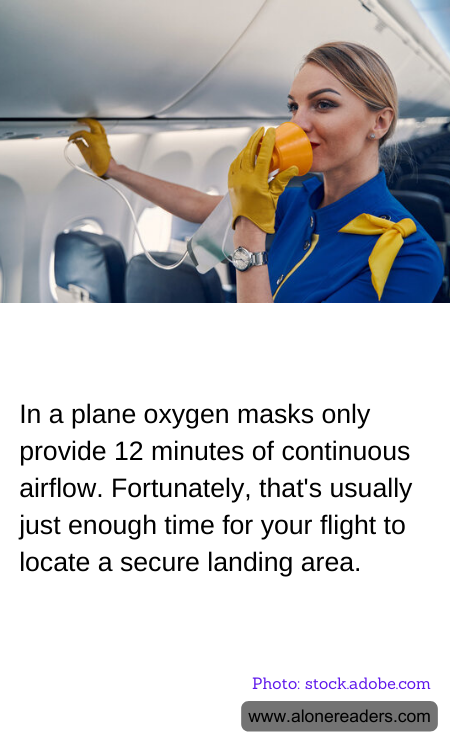
When you are flying, safety is a top priority, and understanding the function and limitations of onboard safety equipment is crucial. In the event of cabin depressurization, oxygen masks are deployed to provide passengers with supplemental oxygen. It might be surprising, but these masks are typically designed to provide oxygen for only about 12 minutes. While that might sound brief, it is generally enough time under normal emergency procedures for pilots to bring the aircraft to a safer, breathable altitude.
Cabin depressurization, though rare, can be caused by structural failures or cracks in the windows or fuselage. At high altitudes, the atmosphere is too thin to provide sufficient oxygen for breathing, which makes these masks life-savers. Once the masks drop, passengers are advised to put them on immediately as consciousness can only be sustained for a few moments without supplemental oxygen at high altitudes.
The reason why the oxygen supply is limited to around 12 minutes is rooted in practical engineering and safety calculations. Aircraft are typically capable of performing a rapid descent to below 10,000 feet, where the air is breathable, within a few minutes following a loss of cabin pressure. This quick descent ensures that the short supply of oxygen provided by the masks is adequate while minimizing the risks associated with high-altitude exposure.
Pilots train extensively for such scenarios, where rapid response is critical. Upon recognizing cabin depressurization, they initiate an emergency descent while communicating with air traffic control to clear a path for this maneuver and to prepare for possible diversion to the nearest suitable airport. Thus, the seemingly scant 12 minutes of oxygen is part of a well-coordinated strategy to handle the rare yet potential risks during flight.
Understanding such aspects of flight safety can reassure passengers about the layers of precautions in place designed to handle emergencies efficiently. While the thought of needing to use an oxygen mask can be unsettling, it is comforting to know that these systems are designed for quick response and short-term resolution, aiming to ensure the safety of everyone on board.
