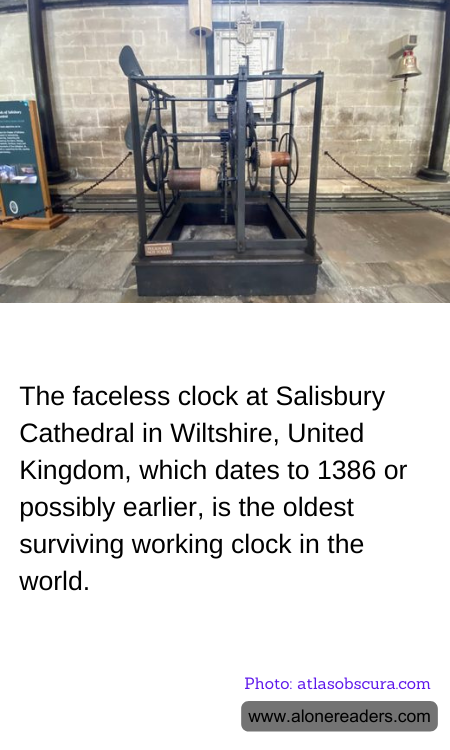
In the heart of Salisbury, Wiltshire, stands an extraordinary piece of medieval engineering—the Salisbury Cathedral clock. Believed to have been constructed in 1386 or even earlier, it holds the title of the oldest surviving working clock in the world. This remarkable timekeeping artifact offers a unique glimpse into the technological advancements of the 14th century.
The Salisbury Cathedral clock is a faceless timepiece, meaning it does not display the time with hands or a dial as modern clocks do. Instead, it was originally built to strike the hours, serving a practical purpose in organizing the daily services and rituals in the cathedral. The clock's mechanism is a simple yet fascinating example of early mechanical engineering. It operates using a verge-and-foliot escapement, a technology that was cutting-edge at the time of its creation.
This ancient clock was not always recognized for its historic value. For many years, its parts were dispersed and its significance overlooked. It was only in the 1920s that the clock was rediscovered, restored, and returned to working order. Today, it is not only a functional piece but also a cherished historical artifact, housed in Salisbury Cathedral's north nave aisle for visitors to admire.
The continued operation of the Salisbury Cathedral clock is a testament to the craftsmanship and ingenuity of medieval clockmakers. It also highlights the importance of timekeeping through the ages, serving both religious and communal needs. As the oldest working clock in existence, it attracts historians, tourists, and horology enthusiasts from around the world, all eager to witness a living piece of history.
Preserving and maintaining such an ancient mechanism poses significant challenges. Experts in horology and conservation work together to ensure that this medieval clock can continue to tick for future generations. The Salisbury Cathedral clock not only tells the time but also tells a story of medieval life, technological progress, and the timeless human quest to measure and manage time.
