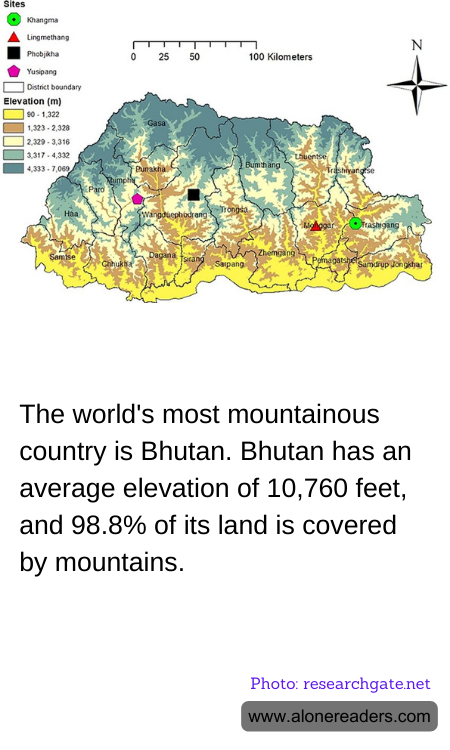
Bhutan, revered for its unspoiled landscapes and commanding mountain ranges, stands as the world's most mountainous country. Nestled in the heart of the Eastern Himalayas, it boasts an average elevation surpassing 10,760 feet, a feature that significantly influences its climate, biodiversity, and way of life. Mountains cover an astounding 98.8% of its terrain, making it not only a sanctuary for nature enthusiasts and trekkers but also a pivotal area for ecological research.
The profound impact of Bhutan's topography extends beyond natural beauty, deeply affecting the social and cultural fabric of the nation. The rugged terrain presents challenges for infrastructure development and connectivity, which in turn preserves its isolation and helps maintain its distinct cultural identity amidst the pressures of globalization. This isolation has also allowed Bhutan to pursue a unique developmental philosophy known as Gross National Happiness, wherein economic development is balanced with spiritual and cultural growth, environmental sustainability, and social welfare.
Moreover, the mountainous landscape fosters a rich variety of ecosystems, ranging from subtropical plains in the south to temperate forests in the mid-levels, and icy peaks at higher elevations. This diversity supports an array of flora and fauna, some of which are endemic to the region. The commitment to conservation is paramount in Bhutanese policy, with more than 60% of its land under forest cover and a significant portion designated as national parks. This not only helps protect numerous endangered species but also places Bhutan at the forefront of global conservation efforts.
Despite its geographical challenges, Bhutan's reliance on its mountainous terrain is profound. Hydroelectric power, generated from its fast-flowing rivers, constitutes a major part of Bhutan's economy and is a significant export to neighboring countries. This sustainable resource underscores the interplay between the country’s natural endowments and its economic strategies, leveraging its geographical features towards self-reliance and sustainable growth.
In essence, Bhutan exemplifies how geography can shape a nation's destiny—culturally, economically, and environmentally. The mountains, while presenting immediate physical barriers, also offer the nation a pathway to sustainable development, preserving both its ecological treasures and cultural heritage for future generations.
