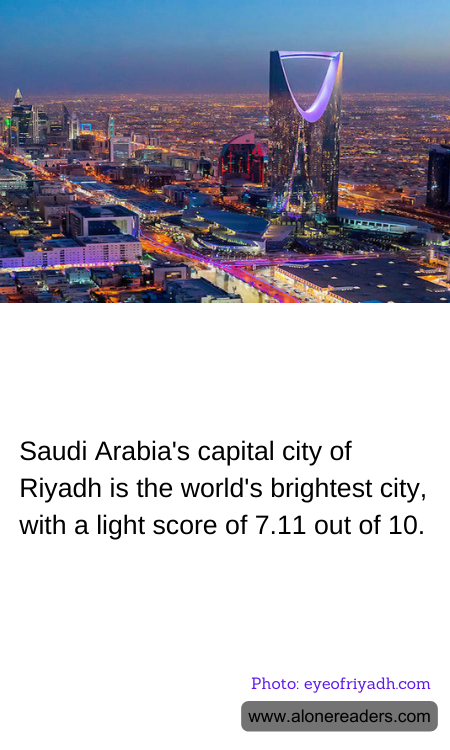
Saudi Arabia's capital, Riyadh, stands out as the world's brightest city, boasting a light score of 7.11 out of 10. This intriguing distinction highlights the city's extensive use of artificial lighting, which illuminates its skyline and streets, making it significantly visible from space.
The high light score of Riyadh can be attributed to several factors including expansive urban development, large-scale commercial areas, and numerous high-rise buildings that contribute to its brightness. The dramatic illumination not only enhances the city's aesthetics but also plays a crucial role in terms of safety and security for its residents.
Furthermore, this characteristic has marked Riyadh as a beacon of modernity and development in the region. The city's infrastructure is designed to not only handle the needs of its current population but also to anticipate future growth. This forward-thinking approach in urban planning reflects Saudi Arabia's ambitions under its Vision 2030 initiative, which aims to diversify the economy away from oil dependence and develop public service sectors such as health, education, infrastructure, recreation, and tourism.
However, the city’s brightness, while beneficial in terms of cityscape aesthetics and safety, raises concerns regarding light pollution. Excessive artificial light can disrupt ecosystems, affect wildlife behavior, and reduce the visibility of stars in the night sky. In response, there are growing discussions about sustainable lighting solutions that balance both human needs and environmental considerations.
As Riyadh continues to grow and evolve, managing its light emissions will become an integral aspect of its urban development strategy, aiming to achieve a balance between its gleaming cityscape and the preservation of its natural surroundings, ensuring the city remains a vibrant hub for commerce, culture, and community life without compromising its environmental responsibilities.
