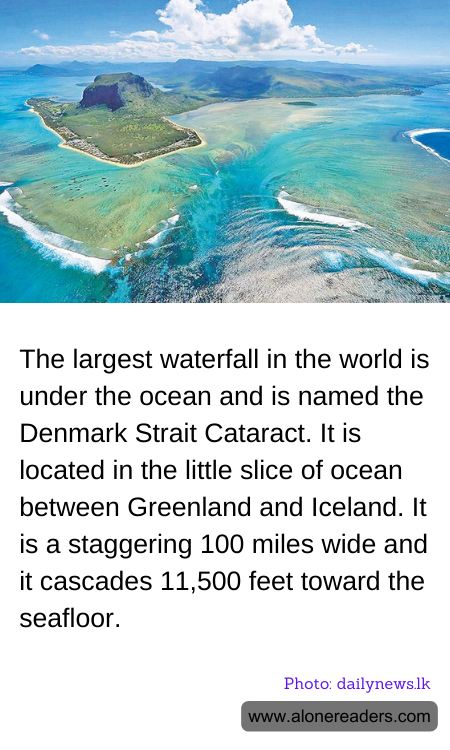
Deep beneath the cold, unforgiving waters that swirl between Greenland and Iceland, lies a natural marvel that surpasses even the most astounding waterfalls on the surface of our planet. The Denmark Strait Cataract holds the title for the largest waterfall in the world, yet it remains virtually unknown to much of the global populace due to its secretive, subaqueous location. This underwater spectacle measures about 100 miles wide and plunges approximately 11,500 feet down toward the seafloor, dwarfing all land-based counterparts by a significant margin.
The formation of the Denmark Strait Cataract is a fascinating geological process largely governed by the temperature and salinity differences in the oceanic waters. Warmer, less dense water from the south meets the colder, denser water from the north in the strait. As these two water masses converge, the colder water, being heavier, slips under the warmer water, creating a downward current that effectively becomes the underwater waterfall.
This colossal cataract is not just a curiosity but plays a crucial role in the regulation of water temperatures and salinity levels across the globe, contributing to the proper functioning of oceanic conveyor belts that govern global climate systems. Furthermore, the dynamics at the Denmark Strait have a profound impact on marine biodiversity in the area. The nutrient-rich waters that are churned up as they fall down the cataract and mix into deeper ocean layers support a vibrant ecosystem, attracting a variety of marine life including unique species of fish, plankton, and other organisms essential to the marine food chain.
Despite its massive scale and ecological importance, studying the Denmark Strait Cataract poses significant challenges due to the harsh, inaccessible environment in which it exists. However, advancements in oceanography and technology such as underwater robotics and sophisticated sonar mapping have allowed scientists to study and begin to understand the complex dynamics of this underwater waterfall.
The Denmark Strait Cataract serves as a breathtaking reminder of the hidden wonders that lie beneath the ocean’s surface, waiting to be discovered and understood. It underscores the vastness and the unknowns of our planet's underwater landscapes, revealing processes and features as majestic as any found on land, yet veiled by the depths of the oceans. As exploration continues, it is likely that we will find more such extraordinary natural features, expanding our knowledge and appreciation of the Earth's hidden hydrological marvels.
