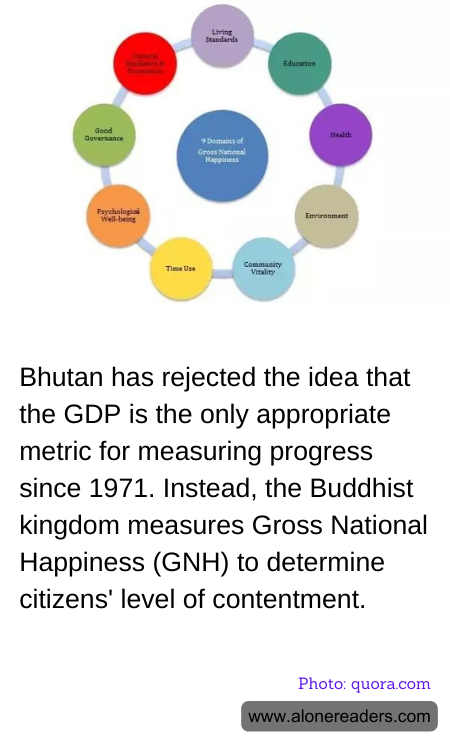
In 1971, Bhutan introduced a novel concept to the world of economics and development: Gross National Happiness (GNH). Veering away from the conventional growth indicator of Gross Domestic Product (GDP), which measures economic progress in purely monetary terms, Bhutan embarked on a path to assess its developmental success based on the happiness and well-being of its people. This shift reflects the deeply ingrained Buddhist principles that prioritize spiritual balance and mental well-being as integral aspects of a prosperous society.
The concept of GNH is built upon four pillars: sustainable and equitable socio-economic development, preservation and promotion of cultural values, conservation of the natural environment, and establishment of good governance. These elements are interwoven to create a holistic approach to development. Measuring GNH involves a detailed survey that assesses nine domains deemed crucial for the happiness of Bhutan’s citizens. These include psychological well-being, health, education, time use, cultural diversity and resilience, good governance, community vitality, ecological diversity and resilience, and living standards.
Over the years, Bhutan’s pioneering vision has sparked international interest and has been the subject of various international discussions and conferences. It has inspired a broader global conversation about the effectiveness of GDP as a sole indicator of a nation's progress and the importance of incorporating well-being and sustainability in the metrics of national growth. Critics of GDP have pointed out its inability to account for environmental degradation, resource depletion, and social inequality, issues that GNH directly addresses.
Despite the appeal of GNH as a more holistic and humane measure of national well-being, implementing it across different cultural and political contexts can be challenging. The subjective nature of happiness and different cultural interpretations of well-being mean that what works in Bhutan might not be directly transferrable elsewhere. Nevertheless, Bhutan’s GNH serves as a pioneering model for others to consider broadening the scope of how they evaluate progress and success.
By forging its own path, Bhutan not only challenges global norms but also compels other nations to rethink economic success in the 21st century. The pursuit of happiness, once thought to be an abstract and unquantifiable goal, has been transformed into a structured index that guides the development of Bhutan, aiming to ensure that economic growth does not compromise the cultural, social, and environmental health of the nation. As the world confronts global challenges like climate change and social inequality, the principles underpinning GNH could play a crucial role in shaping future policies aimed at sustainable and inclusive growth.
