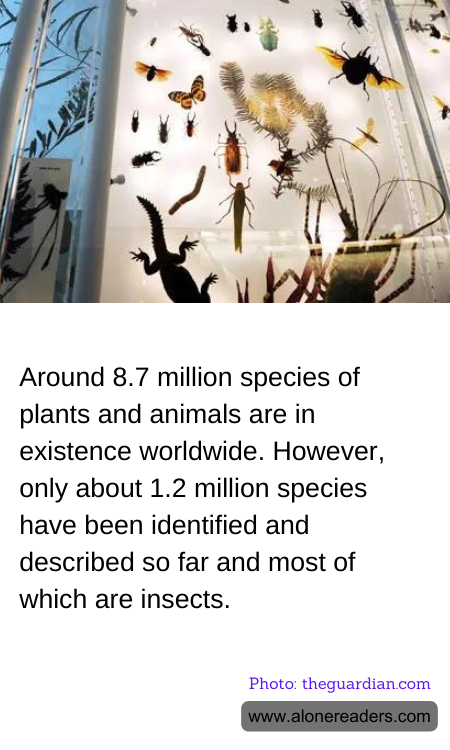
The vast diversity of life on Earth is both astonishing and significant — from the smallest microscopic organisms to the-largest mammals and towering trees. It is estimated that Earth is home to around 8.7 million species of plants and animals. This multitude includes a breathtaking array of organisms adapted to every conceivable environment, showcasing the evolutionary creativity of nature.
Despite centuries of scientific study, the majority of Earth's biodiversity remains mysterious. Only about 1.2 million species have been formally identified and documented in scientific literature, representing a mere fragment of the total predicted number. A large proportion of these identified species are insects, which dominate in terms of sheer numbers and varieties, highlighting their evolutionary success and integral role in ecosystems as pollinators, decomposers, and sources of food for other animals.
This gap in knowledge underscores the urgent need for more comprehensive biological inventories and ecological research. Many species are likely disappearing before they can even be discovered, due to rapid habitat loss, climate change, and other human impacts. This unrecorded loss could have dire implications, as biodiversity plays critical roles in maintaining the resilience and functionality of ecosystems. Healthy ecosystems, in turn, are crucial for human well-being, providing essential services such as clean air and water, fertile soil for agriculture, and materials for shelter and medicine.
As technology and methodology in species discovery and classification advance, there is hope that more species will be documented at a faster rate. However, this requires international cooperation and a sustained commitment to environmental and conservation sciences. The conservation of already known and yet-to-be-discovered species is also paramount. Protecting a wide array of habitats and creating policies that mitigate human impact are essential steps in preserving the natural world.
Understanding the full breadth and depth of Earth's biodiversity is one of the most profound pursuits in science. It compels us not just to catalogue the myriad forms of life, but also to appreciate and ensure the survival of the vast tapestry of biodiversity upon which life, including human life, so greatly depends.
