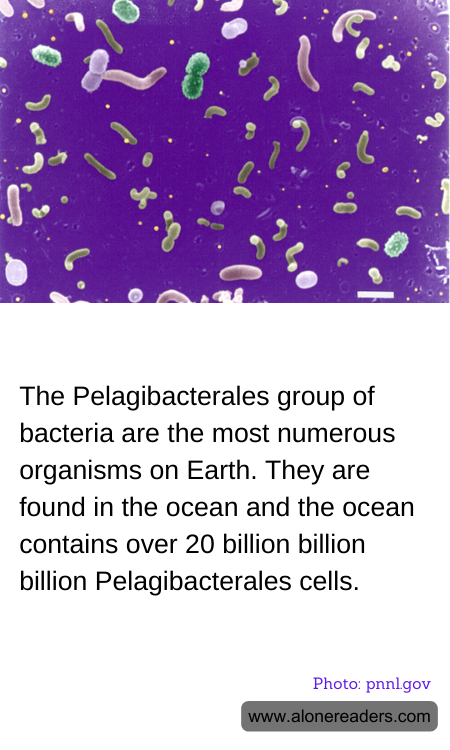
Pelagibacterales, a remarkable group of bacteria, represent some of the most abundant organisms on our planet. Predominantly found in ocean environments, these bacteria are estimated to number over 20 billion billion billion cells, highlighting their immense presence and importance in marine ecosystems.
These microorganisms are incredibly significant in the marine food web, primarily acting as a major source of nutrients and energy for other marine life forms. Through their processes, Pelagibacterales help in the cycling of carbon, nitrogen, and other essential elements. This not only supports the growth of other marine organisms but also plays a critical role in regulating global climate patterns. Their activity influences the ocean's capacity to absorb carbon dioxide from the atmosphere, thus impacting the Earth's climate systems.
The sheer abundance of Pelagibacterales underscores their evolutionary success. Adapted to life in a vast range of oceanic conditions—from sunlit surfaces to the deep-sea trenches—these bacteria exhibit remarkable genetic diversity, which enables them to thrive in various environmental niches. Their ability to efficiently utilize scarce nutrients in the open ocean, particularly in nutrient-poor waters, is a testament to their adaptability and ecological significance.
Despite their microscopic size, the collective impact of Pelagibacterales on global ecological balances is profound. They are instrumental in sustaining marine biodiversity and in the biochemical processes that maintain the health of the ocean. As research continues, studying Pelagibacterales is crucial for understanding more about microbial life in the ocean and their broader implications on earth’s biosphere and climate. Understanding these organisms not only helps in revealing the hidden complexities of marine life but also in managing and preserving ocean health in the face of climate change and human impact.
