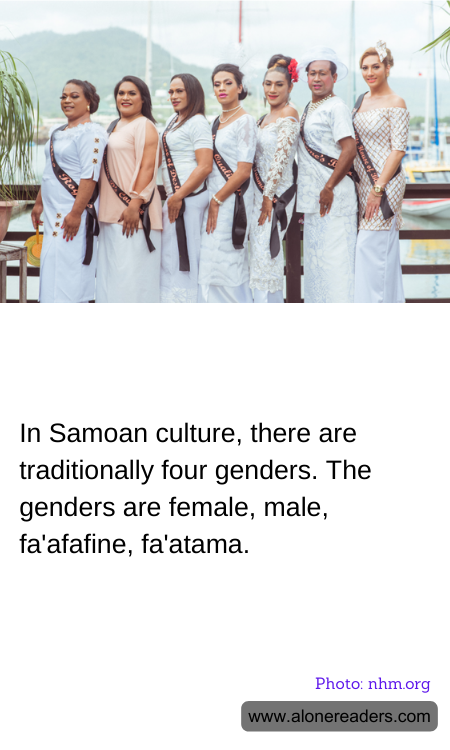
In the rich tapestry of Samoan culture, gender identity extends beyond the binary distinctions commonly recognized in many parts of the world. Traditionally, Samoans acknowledge four distinct gender roles: female, male, fa'afafine, and fa'atama, each playing a unique role in the social and cultural life of the community.
Fa'afafine, which translates to "in the manner of a woman," represents a third gender role distinctive to Samoa. Individuals who identify as fa'afafine are anatomically male but embody both masculine and feminine gender traits. They are often integrated into Samoan communities as caretakers, artisans, and holders of cultural knowledge, much like women. Despite their male biology, fa'afafine dress and behave predominantly in ways associated with traditional female roles, and are widely accepted by society.
Similarly, fa'atama, translating to "in the manner of a man," describes individuals who are anatomically female but assume roles and aesthetics typically associated with men within the community. Unlike fa'afafine, fa'atama may dress and express themselves in a manner that aligns more closely with male gender norms and undertake tasks and responsibilities often designated for men.
The acceptance and integration of these additional genders highlight Samoa’s unique approach to gender identity, far from viewing it on a simplistic scale. Instead, gender understanding in Samoan society is fluid and dynamic, allowing more space for individual identity without diminishing one's social belonging and acceptance.
The recognition of multiple genders in Samoa fosters a community-oriented culture where roles and responsibilities can be suited to a person’s capabilities and personality rather than strictly their gender at birth. The inclusion of fa'afafine and fa'atama in social, religious, and economic life enriches the traditional cultural practices and reinforces the strong familial bonds that are pivotal to Samoan social structure.
This model of gender fluidity in Samoa stands as a vital example of the diverse manifestations of gender identity across different cultures, challenging more rigid gender constructs and promoting a broader understanding of human diversity. Through their acceptance of fa'afafine and fa'atama, the Samoan people embody a more inclusive view of gender, which encourages harmony and acceptance within the community.
