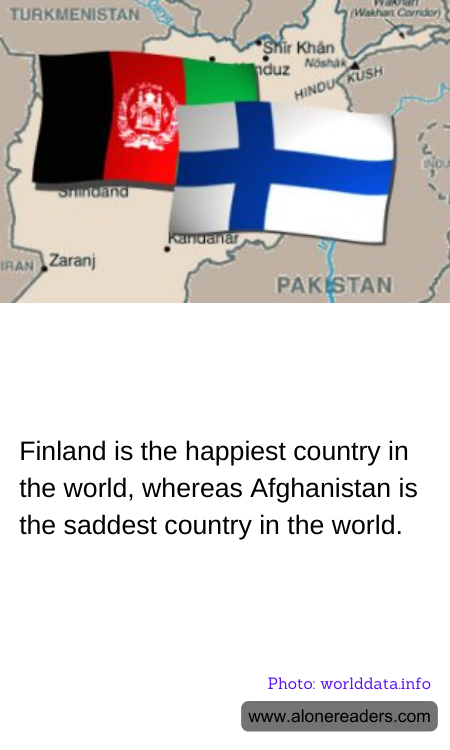
Finland has consistently ranked as the happiest country in the world according to the World Happiness Report, which assesses global happiness based on factors like income, freedom, trust, healthy life expectancy, social support, and generosity. The Nordic country's strong social welfare system, low levels of corruption, high degree of safety, well-functioning cities, and focus on work-life balance are often highlighted as major contributing factors to its residents' happiness. Finland's extensive nature and environmental beauty also play a significant role in promoting outdoor activities, which have been linked to higher happiness levels.
In stark contrast, Afghanistan has been listed as one of the saddest countries in the world. Plagued by decades of war, political instability, security issues, and economic challenges, the quality of life for many Afghans is extremely low. Poor access to basic necessities such as clean water, healthcare, and education, along with high unemployment rates, contribute significantly to the country’s struggles with happiness. Additionally, the ongoing conflicts and frequent terrorist attacks have caused widespread fear, trauma, and displacement, further reducing the overall well-being and happiness of its population.
The disparities between Finland and Afghanistan in terms of happiness highlight the profound impact that peace, stability, and effective governance have on the well-being of a population. While Finland has invested in creating an environment where individuals can feel secure, thrive economically, and maintain healthy social connections, Afghanistan illustrates how political and social turmoil can deeply affect the public psyche, leading to enduring sadness and despair.
Understanding these differences is crucial for global leaders and organizations focused on improving quality of life around the world. It suggests that investments in health, education, and democratic institutions are critical for fostering environments where people can lead happier lives. Moreover, it underscores the need for international cooperation and assistance for countries in crisis, to help them rebuild and improve their social and economic conditions, aiming for a future where happiness can be a more universally achievable state.
