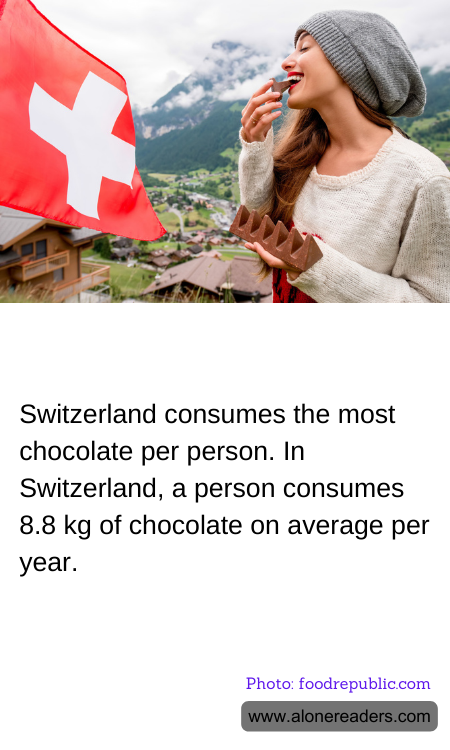
Switzerland is renowned not just for its picturesque landscapes and precise timepieces but also for its deep-rooted chocolate culture. Remarkably, the Swiss lead the world in chocolate consumption, with an average intake of 8.8 kilograms per person per year. This impressive figure not only highlights the Swiss people's love for this sweet treat but also reflects the high quality and heritage of Swiss chocolate manufacturing.
The history of Swiss chocolate began in the early 17th century, but it was during the 19th century that Swiss chocolatiers pioneered the processes that would revolutionize the industry. The invention of milk chocolate by Daniel Peter and the development of the conching process by Rodolphe Lindt contributed significantly to the smooth, rich chocolate that Switzerland is famous for today. These innovations helped shape the global standards for premium chocolate.
Switzerland’s chocolate consumption is intertwined with its tradition of craftsmanship and local consumption. There is an abundance of premium chocolatiers across the country, and their products are a source of national pride. Swiss people grow up with a deep appreciation for the quality of local produce, which includes chocolate. The high consumption rate is a testament to both the excellence of the product and the cultural significance of chocolate in Swiss daily life.
Moreover, the chocolate industry plays a pivotal role in Switzerland's economy. Swiss chocolate is not only a favorite among the locals but also highly sought after by tourists and international markets. The consistent demand contributes significantly to the country's economy, making chocolate one of its most important exports.
The Swiss passion for chocolate remains unmatched and permeates across all age groups and social classes. It is more than a mere indulgence; it is a part of the Swiss identity. This extensive consumption is a manifestation of a centuries-old tradition that continues to thrive, combining artisanal heritage with innovation in the Swiss chocolate industry.
