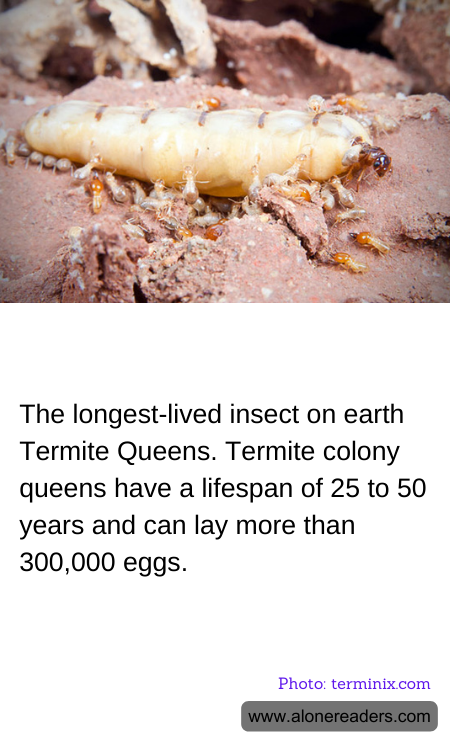
Among insects, the longevity crown is held by termite queens, remarkable creatures whose lifespans defy the typically short-lived nature of their kin. Living anywhere from 25 to 50 years, these queens preside over expansive colonies where they play a central role in the survival and expansion of their kind. Unlike many insects that live only for days or months, termite queens exhibit extraordinary endurance and reproductive capabilities that fascinate scientists and laypersons alike.
The secret to the longevity of termite queens may lie in their unique living conditions and the evolutionary adaptations that these insects have undergone. Burrowed deep within secure, humid nests, termite queens are sheltered from external threats like predators and environmental extremes, conditions that typically claim the lives of many other insects at much earlier stages. This protected environment, coupled with the meticulous care she receives from worker termites, creates an optimal setting for her extended lifespan.
Moreover, termite queens are phenomenal in terms of reproduction, laying over 300,000 eggs annually. This not only demonstrates an incredible biological feat but also ensures the continuity and expansion of the colony. Each egg has the potential to grow into a worker, soldier, or even a future king or queen, thereby perpetuating the colony's lifecycle and the species as a whole.
This incredible reproductive rate coupled with their longevity allows termite queens to build vast, vigorous colonies that play significant roles in their ecosystems. As decomposers, termites play a crucial part in the nutrient cycle, breaking down tough cellulose materials and returning essential elements to the soil. Thus, the queen’s extensive lifespan is of great ecological importance, facilitating the breakdown of organic matter over many decades.
The study of termite queens is not only interesting from a biological standpoint but is also valuable for ecological sustainability and understanding aging processes. Learning how these insects manage to maintain vitality and reproductive output over such extended periods can provide insights that may be applicable across a range of scientific fields, from gerontology to ecosystem management. In essence, the termite queen's lengthy reign is a marvel of nature, blending endurance, fertility, and ecological significance into one tiny, yet mighty, package.
