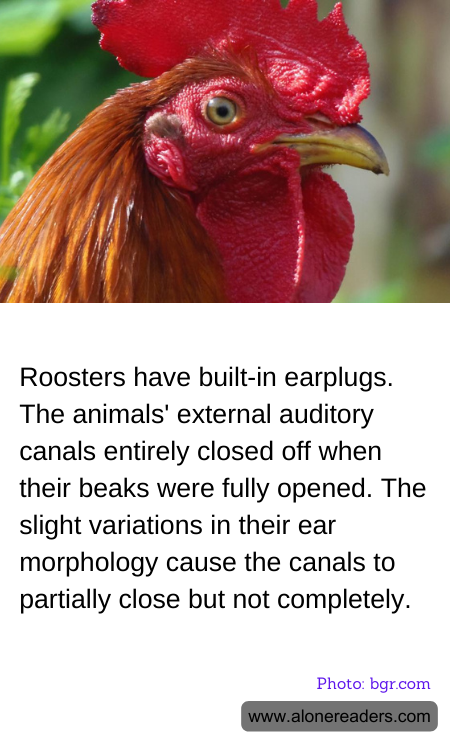
Roosters are well known for their loud crowing, a trait that can be a significant disruption in farmyards and rural areas. Interestingly, these birds have developed a unique biological adaptation that protects them from their own piercing calls. When roosters open their beaks to crow, their external auditory canals completely close off, essentially giving them built-in earplugs. This remarkable mechanism prevents the loud vocalizations from damaging their hearing.
The anatomy of a rooster's ears includes slight variations that differ from other birds. Normally, a bird's ear canal will remain open, allowing sound waves to enter freely and be processed as normal. However, in roosters, when the mouth is fully opened to crow, the surrounding tissues and structures of the ear canal adjust to seal off the canal, effectively blocking the passage of sound. This adaptative trait is crucial since the sound of a rooster's crow can reach up to 140 decibels, as loud as standing on an aircraft carrier deck during operations.
Despite this closure, the rooster’s hearing is not adversely affected. The blockage in the ear canal only occurs during the crowing process and is temporary, thereby allowing the rooster to maintain its spatial and environmental awareness. This ability is essential not only for territory defense by crowing but also for staying alert to the threats around them.
The process by which roosters shield their hearing is an excellent example of evolutionary adaptation within specific environments. This natural mechanism supports their social and communication needs while protecting vital sensory functions. It highlights the sophisticated interplay between behavior and physiology in the animal kingdom. As researchers continue to explore the various ways animals adapt to their environments, understanding such mechanisms can also shed light on the potential for similar adaptations in other species.
