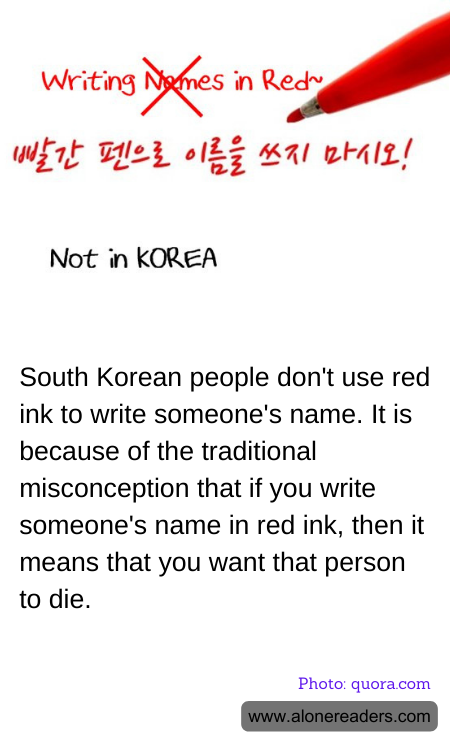
In South Korea, cultural superstitions carry significant weight in both social and personal practices. One of the lesser-known but impactful beliefs is related to the use of red ink. Traditionally, it is considered taboo to write someone's name in red ink. This taboo stems from historical practices where red ink was used to record the names of the deceased. In some instances, it was specifically used in the family register before cremation or burial, and so, writing someone's name in red came to signify death or the wish for the person's death.
This belief is deeply embedded in Korean culture, reflecting the importance of respect and honor towards others. Red ink is strictly used for correcting printed documents or in other less personal contexts. The avoidance of red ink for names is a reflection of cultural sensitivity and a way to show respect. Violating this norm can be seen as wishing harm upon someone or showing a profound level of disrespect.
Moreover, this superstition is taken so seriously that the use of red ink can impact social relationships and interactions. For instance, if a person were to receive a letter or a note with their name written in red, it could be perceived as an act of aggression or an ill wish, and significantly strain interpersonal relations.
The prohibition of red ink for names is just one example of how traditional beliefs continue to influence modern-day Korean society. Even with the advancement of technology and the global interconnectedness, these cultural nuances continue to shape everyday practices and social behaviors in Korea. It underscores how deeply historical and cultural roots can influence contemporary life and reminds us of the importance of understanding and respecting these practices when interacting with different cultures.
