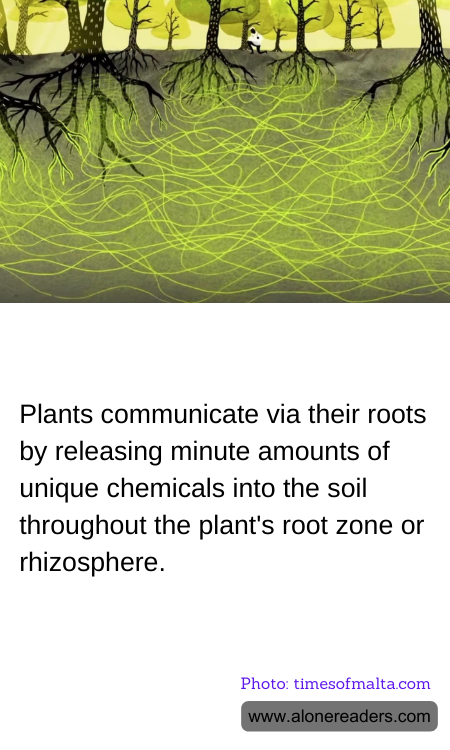
Plants, often perceived as static and isolated organisms, engage in a complex, chemical-based mode of communication through their roots. This communication takes place in a region known as the rhizosphere, the narrow zone of soil that is directly influenced by root secretions and associated soil microorganisms. Plants release a variety of molecular compounds into the rhizosphere, which can affect the behavior and development of neighboring plants.
These compounds are primarily chemical signals; some serve to alert neighboring plants about environmental stresses, such as drought or pest attacks, while others can inhibit the growth of competing plant species – a phenomenon known as allelopathy. For instance, certain chemicals can hinder the germination or root development of nearby plants, effectively reducing competition for valuable soil nutrients and water.
Moreover, this underground network of communication also plays a crucial role in symbiotic relationships. For example, legumes release specific chemical signals from their roots that attract beneficial bacteria known as rhizobia. In response, rhizobia fix nitrogen from the atmosphere into a form that the plants can readily use. This symbiotic relationship demonstrates the intricate and cooperative interactions facilitated by chemical messaging in the soil.
Recent studies have also suggested that plants might use these chemical signals to recruit microbial allies. These microbes can help plants by providing essential nutrients, detoxifying soil, or defending against pathogens. Such discoveries underscore the complexity of the rhizosphere as a dynamic 'communication hub' where chemical messages are continuously exchanged, influencing not only inter-plant relationships but also broader ecological interactions.
This root-based communication challenges our traditional perception of plants as solitary entities, highlighting a form of interaction that is less visible but vital for survival and competitiveness in natural environments. Understanding these interactions better can have practical applications in agriculture and horticulture, enabling the development of more sustainable practices that leverage natural plant behaviors for crop protection and growth enhancement.
