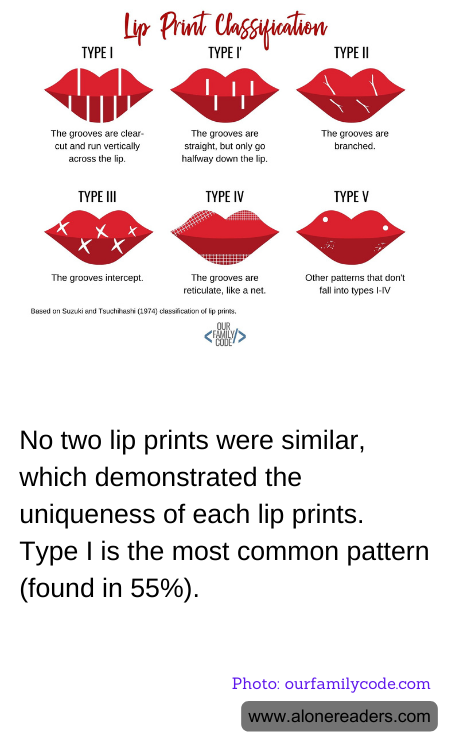
Lip prints, much like fingerprints, are unique to each individual, providing an intriguing and relatively underutilized method of identification within forensic science. The individual variability in the grooves and contours on the surface of human lips has been studied and categorized into different types, with Type I being the most prevalent, found in approximately 55% of the population.
This categorization into different types helps forensic experts understand and utilize these unique identifiers more effectively. Lip prints are left at crime scenes on glasses, cigarette butts, and other surfaces where the lips might come into direct contact. In analyzing these prints, forensic experts can extract vital clues that could link a suspect to a crime or help solve a case more efficiently.
Despite their proven usefulness, lip prints have not yet achieved the same level of acceptance or prevalence as fingerprinting in forensic investigations. This lower level of utilization can be attributed to a lack of standardized techniques for collecting and analyzing these prints and a limited awareness of their potential among some law enforcement agencies.
With advancements in forensic technology and a greater focus on developing robust methodologies for lip print analysis, this form of identification may become more widely used in the future. Larger datasets and more comprehensive studies on the various patterns of lip prints across different demographics are also needed to enhance the reliability of lip print forensics, potentially revolutionizing how investigators approach the crime scene evidence. The unique nature of lip prints offers a promising tool for forensic applications, provided there's enough infrastructure and knowledge to support its implementation.
