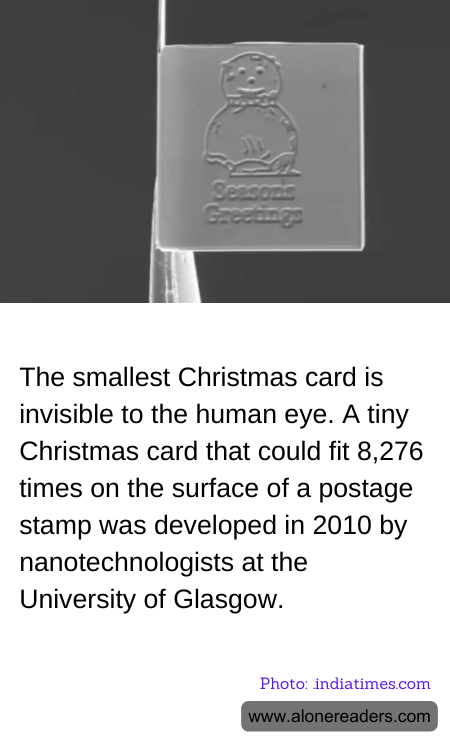
In 2010, nanotechnologists at the University of Glasgow crafted an extraordinary feat in the realm of minuscule design—a Christmas card so small that it is invisible to the naked eye. This remarkable achievement not only set a world record but also showcased the incredible capabilities and potential of nanotechnology. The card, which measures only 200 micrometers wide by 290 micrometers tall, could sit comfortably on an area smaller than a human hair's width.
Creating such a minuscule card involved complex, cutting-edge techniques in the field of microfabrication. The team used a focused ion beam, a tool that allowed them to etch the design onto a tiny piece of silicon. This process is similar to how computer chips are made, but on an even smaller scale. Despite its size, the card was detailed enough to feature an etching of a Christmas tree adorned with the words "Season’s Greetings"—a festive message that could only be read with the aid of a powerful microscope.
This tiny card's development was more than just a novelty or a bid for a place in the record books; it demonstrated how advanced nanotechnology has become and its potential applications. Such technologies could be used in various fields, including electronics, medicine, and environmental science, where ultra-small devices are increasingly vital.
Moreover, the University of Glasgow's accomplishment highlighted an exciting aspect of nanotechnology: its ability to create or manipulate materials at a very small scale, which can lead to new properties and functionalities. This capability opens up opportunities for innovation in areas like drug delivery systems, where nanoparticles could be used to target specific areas of the body more efficiently, or in the development of smaller, more powerful electronic devices.
As technology continues to advance, the boundaries of what can be achieved at microscopic levels will expand, leading to further innovations that could transform everyday life. The creation of the world's smallest Christmas card is a whimsical yet profound example of this potential, marking a milestone in the journey of nanotechnology and setting a foundation for future scientific exploration and technological development.
