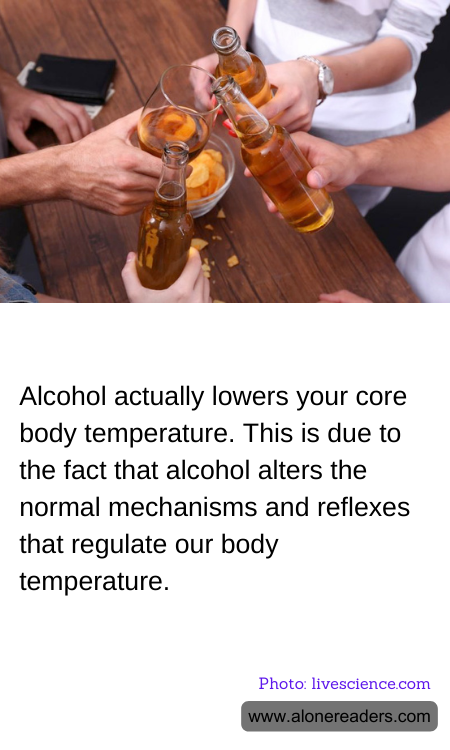
Alcohol is often associated with a warming sensation, commonly believed to raise body heat due to the immediate flush and relaxed feeling it can provide. However, it actually has the opposite effect on core body temperature. Alcohol can cause blood vessels to dilate and increase blood flow to the skin's surface, leading to initial feelings of warmth but ultimately resulting in a decrease in body heat.
This vasodilation process triggered by alcohol consumption is where the blood vessels expand, allowing more warm blood to flow to the surface of the skin. While this can give a temporary feeling of heat and can make the skin feel warm to the touch, it actually allows heat to escape from the body more rapidly. This is particularly deceptive because while the skin feels warm, the body’s core temperature is dropping.
The lower core temperature doesn't just feel different, it can also alter the body's natural responses to cold temperatures. Normally, when exposed to cold environments, the body reacts through shivering and constriction of the skin's blood vessels—mechanisms intended to increase body heat and conserve energy. However, alcohol inhibits the hypothalamus in the brain, which regulates body temperature, thus impairing the body’s natural heat-regulating abilities.
Additionally, alcohol's impact on the liver further complicates the body's ability to regulate its temperature. The liver plays a crucial role in regulating and generating heat within the body, and alcohol consumption demands the liver to process the toxins, distracting it from its other functions. When diverted from its heat regulation duties, the body becomes poorly equipped to manage its thermal balance.
The combination of these effects makes alcohol a poor choice for trying to stay warm in cold conditions. Consuming alcohol in chilly or freezing temperatures increases the risk of hypothermia, a potentially dangerous drop in body temperature. It's important for individuals to be aware of these effects, especially in environments that require effective body heat management, such as in outdoor winter activities. Opting for warm, non-alcoholic beverages and proper clothing are safer and more effective ways to maintain body heat when it’s cold outside. Understanding how alcohol affects body temperature can help in making informed choices for maintaining wellbeing in various environmental conditions.
