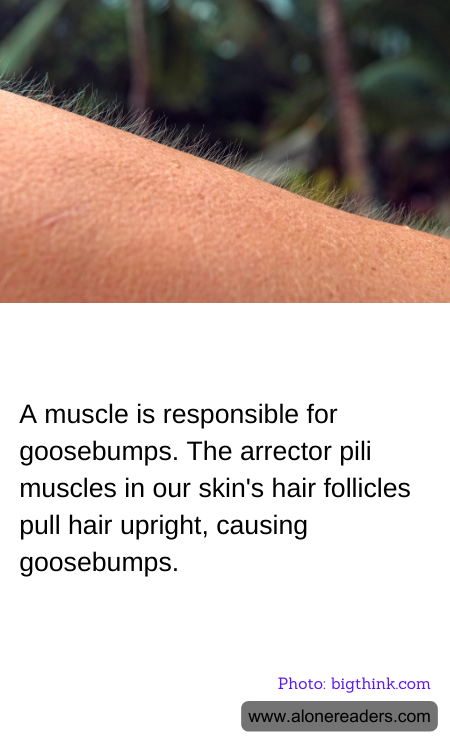
When we experience cold or feel strong emotions like fear or awe, our bodies manifest physical responses, one of which is goosebumps. These tiny bumps on the surface of the skin, often referred to as "gooseflesh," are the result of the activation of tiny muscles called the arrector pili. These muscles are located at the base of each hair follicle, and their primary function is not just aesthetic or expressive.
The arrector pili muscles are small, smooth, and involuntary, which means they function without conscious control. When stimulated, these muscles contract, causing the hair that they are attached to stand up straight. This reaction is a holdover from our animal ancestors for whom a fluffed up fur coat was a way to retain heat in cold conditions or appear larger and more intimidating to predators or rivals. In humans, this physiological response is less functional in terms of thermal regulation or defense but persists as a vestigial reflex.
The response of the arrector pili muscles can be triggered by a sudden drop in temperature. This reaction forms a layer of insulation with trapped air between the hairs, which might have helped our ancestors keep warm. It can also occur in response to emotional stimuli—anything from hearing a powerful piece of music, feeling a surge of nostalgia, or experiencing a fright. This is linked to the adrenaline released during emotional and stressful situations, preparing the body for a "fight or flight" reaction.
Though we have largely lost the dense hair or fur that would make the erection of the hair more significant, the phenomenon of goosebumps remains with us. While they serve little to no functional purpose now, goosebumps are a fascinating reminder of our evolutionary history, revealing the biological strings that still pull us in response to our environments and emotional states. Moreover, for scientists and physiologists, goosebumps are a point of interest for studying the autonomic nervous system and its control over such involuntary muscle actions.
