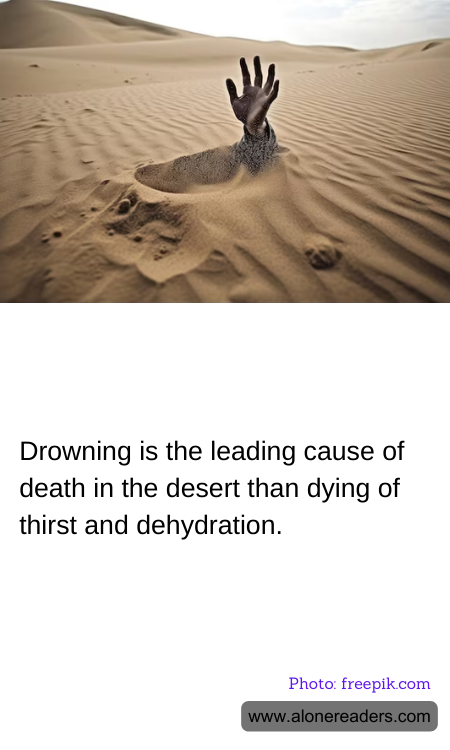
Drowning in the desert, although counterintuitive, can indeed pose a significant risk, especially due to sudden and severe flash flooding. Many people might assume that dehydration or heatstroke are the primary dangers in arid environments. While those conditions remain substantial risks, the unique geographical and climatic conditions of deserts can also create lethal flood scenarios.
Deserts, known for their extreme dryness and sparse rainfall, are also characterized by hard, compacted soil that does not absorb water well. When rains do come, particularly during sudden, intense storms typical of monsoon seasons, the dry ground cannot soak up the water quickly enough. Instead, the water rushes across the surface, leading to fast-forming and powerful flash floods.
These flash floods can be incredibly dangerous because they develop quickly and with little warning, transforming dry riverbeds, known as arroyos, and low-lying areas into violent torrents. The force of these floods can erode roads, sweep away vehicles, and engulf unsuspecting individuals who might underestimate the power of rising waters in such typically dry locations. Additionally, visitors to desert regions may not be alert to the danger since the idea of flooding seems so improbable in what they perceive as a parched environment. For example, slot canyons, attractive spots for hikers exploring desert landscapes, can be deadly traps if a sudden flood occurs, as the narrow canyon walls make swift escape nearly impossible.
Prevention and awareness are crucial in mitigating the risk of drowning in the desert. Weather forecasts should always be checked before setting out for trips in desert areas, especially in seasons prone to sudden storms. Warning signs and information about flood risks should be heeded, and venturing into potentially flood-prone areas during risky times should be avoided. Local knowledge and preparedness can also significantly impact survival rates during such unexpected natural events.
While it might seem ironic that drowning is a significant cause of death in environments best known for their lack of water, the mechanisms behind desert flash floods make it a real and underestimated danger. Understanding and respecting the unique dangers of every environment, even when those dangers seem contradictory to the setting, is vital for safety.
