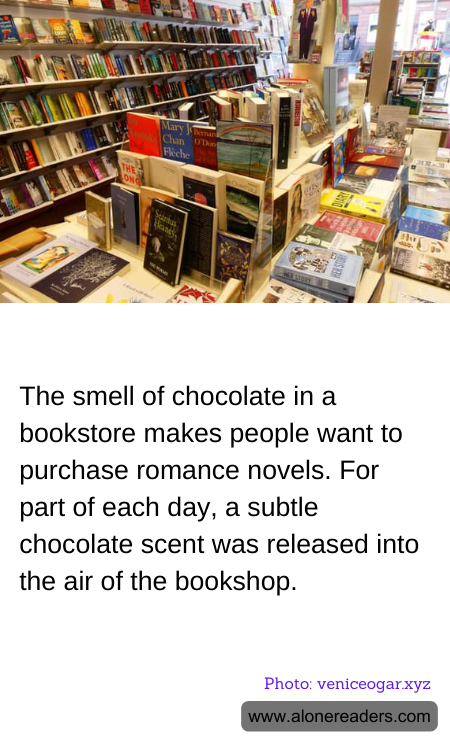
Introducing an aroma into a retail environment to influence consumer behavior has become a nuanced strategy for many businesses. One fascinating exploration of this concept occurs in some bookstores where the subtle fragrance of chocolate is infused into the air during part of the day. Intriguingly, this carefully orchestrated sensory experience has been found to increase the sale of romance novels among other genres.
The connection between scents and consumer behavior isn't entirely new. Research has shown that our sense of smell is intimately linked to our emotional processing systems, which means that certain aromas can evoke specific feelings and memories. Chocolate, with its rich, indulgent aroma, generally evokes warmth, comfort, and a hint of sweetness, sentiments closely aligned with the thematic content of romance novels. It's no surprise, then, that the ambient chocolate scent creates an atmosphere where readers feel more inclined to indulge in stories of love and passion.
The practical implementation of this strategy involves diffusing a chocolate scent for several hours each day, specifically timed to coincide with peak customer footfall. This not only maximizes the sensory impact but also aligns with the peak decision-making times for customers, making them more susceptible to impulse purchases, like picking up a romance novel that they might not have otherwise considered.
Moreover, the psychological effect of this scent can enhance the overall shopping experience, making it more memorable and enjoyable, which, in turn, could lead to increased customer loyalty and repeat visits. Customers might not consciously realize why they feel more drawn to romance novels during their visit, but the scent subtly guides their preferences and choices during their time in the store.
However, the tactic of scent marketing must be employed judiciously. The intensity and type of aroma, the size of the space, the type of products, and the demographic of the customer base all play critical roles in determining the success of such sensory strategies. While the charm of chocolate might enhance the appeal of romance novels in a bookstore, a mismatch between scent and product can just as likely confound and deter potential buyers.
As retail spaces continue to evolve, the strategic use for ambient scents in marketing will likely grow more sophisticated, with retailers experimenting with different scents to boost sales or enhance shopping experiences for various products. Bookstores using chocolate's evocative aroma to spur sales of romance novels showcase a clever and innovative approach to sensory marketing, underscoring the potent influence of smell on consumer behavior.
