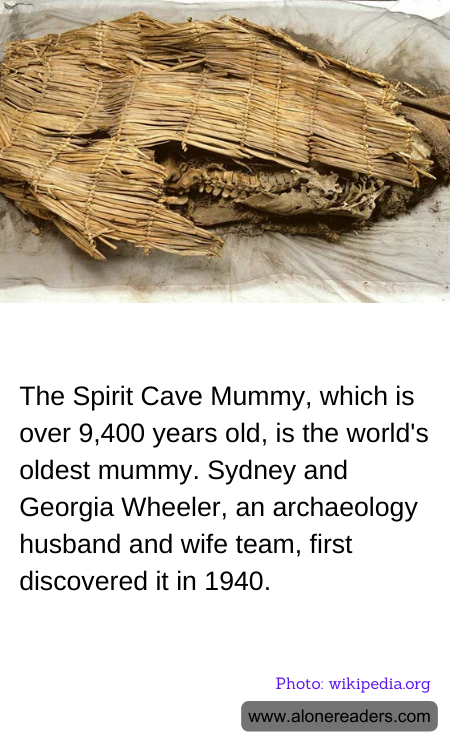
The discovery of the Spirit Cave Mummy in 1940 by archaeologists Sydney and Georgia Wheeler marks a significant moment in the study of ancient human remains. Unearthed in the arid landscapes of Fallon, Nevada, within the Spirit Cave, the mummy is astonishingly over 9,400 years old, making it the oldest known mummy in the world. The Wheelers, while surveying caves for potential archaeological sites, stumbled upon this phenomenal find, which was originally wrapped in a bundle that had been meticulously covered with woven reed mats.
This mummified ancient individual was not initially understood to be as old as subsequent studies revealed. Initially, the age and the unique preservation conditions of the Spirit Cave Mummy were not fully appreciated, and it was stored unassumingly at the Nevada State Museum for decades. It wasn't until 1997 that advanced radiocarbon dating techniques confirmed its extraordinary age, consequently rewriting parts of North American prehistory.
The state of preservation of the Spirit Cave Mummy is particularly notable. The dry, stable conditions within the cave allowed for natural mummification to occur, preserving the skin, hair, and clothing of the mummy, along with a range of artifacts that were buried alongside. Such conditions provided archaeologists and researchers with invaluable insights into the life and environment of early inhabitants of North America. The artifacts found, including tools and clothing, suggest a high level of craftsmanship and adaptation to the environmental conditions of the time.
The mummy's significance extends beyond its age. Ethnographic and genetic studies of the Spirit Cave Mummy have sparked discussions and legal battles regarding the repatriation of Native American remains and cultural items to their rightful communities. DNA analysis linked the remains closely with contemporary Native American tribes, specifically the Fallon Paiute-Shoshone Tribe, which claims the Spirit Cave Mummy as an ancestor. This has led to a broader conversation about the return of cultural heritage, culminating in the repatriation of the mummy to the tribe in 2016.
Thus, the Spirit Cave Mummy continues to be a focal point for discussions in archaeology, anthropology, and the ethics of cultural preservation. It serves as an important example of how scientific discoveries can impact and reshape cultural practices and relationships between modern communities and their historical legacies. It reminds us that each artifact and remnant from the past holds a deeper story that ties into broader human narratives, waiting to be respectfully uncovered and understood.
