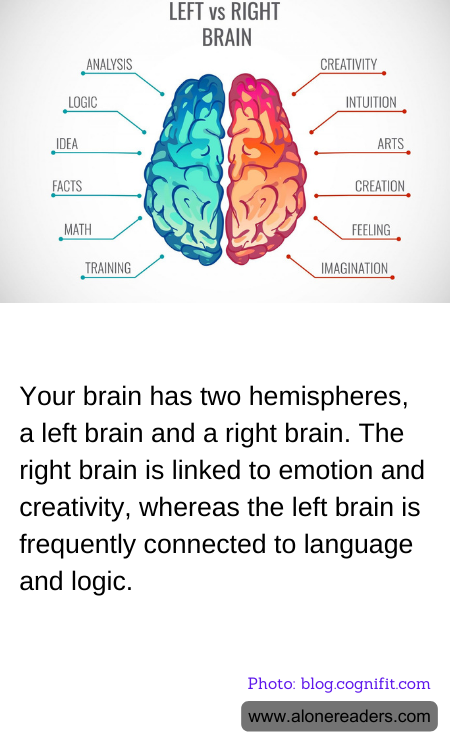
The human brain, a fascinating and complex organ, is divided into two distinct hemispheres, each responsible for different sets of functions. The right hemisphere is often associated with emotion and creativity, playing a pivotal role in visual imagery, music awareness, and processing emotions. It enables individuals to recognize faces, interpret emotional expressions, and appreciate art and music, contributing to what is generally termed as creativity. This side of the brain is less verbal and more concerned with the aesthetic and feeling aspects of thought.
On the other hand, the left hemisphere is traditionally linked with language, logic, and analytical thinking. It is the center for tasks that involve reasoning, number skills, and critical thinking. The left brain's strength lies in its ability to handle tasks that require understanding and communicating through language, be it spoken, written, or signed. It excels in sequencing, linear thinking, and in the detailed analysis of situations and events.
This division of labor between the two hemispheres is known as lateralization. However, it is crucial to note that this division is not absolute. While one hemisphere may dominate in certain functions, the two hemispheres do not work in isolation but are connected by a bundle of fibers called the corpus callosum. This structure enables the hemispheres to communicate and coordinate tasks, which allows for a level of complexity and flexibility in human cognition that is seen in no other species.
In recent years, the understanding of left-brain and right-brain functions has evolved. Researchers suggest that while there exist tendencies for one hemisphere to dominate over certain tasks, both sides of the brain can contribute to both kinds of tasks. Moreover, personality traits that were once categorized under one hemisphere or the others, such as being analytical or creative, are now understood to be more the product of the interactions across both hemispheres.
In educational and psychological contexts, acknowledging both hemispheres' contributions can be beneficial. Developing skills that use both the logical, verbal reasoning of the left brain, and the intuitive, holistic thought processes of the przez zrozumienie i kultivowanie takiej zbilansowanej pracy mózgu.jednostki moga osiagnac wieksza harmonie i efektywnosc. Understanding and fostering such balanced brain activity can help individuals achieve greater harmony and effectiveness, showcasing the brain's incredible versatility and its capacity to adapt and evolve.
