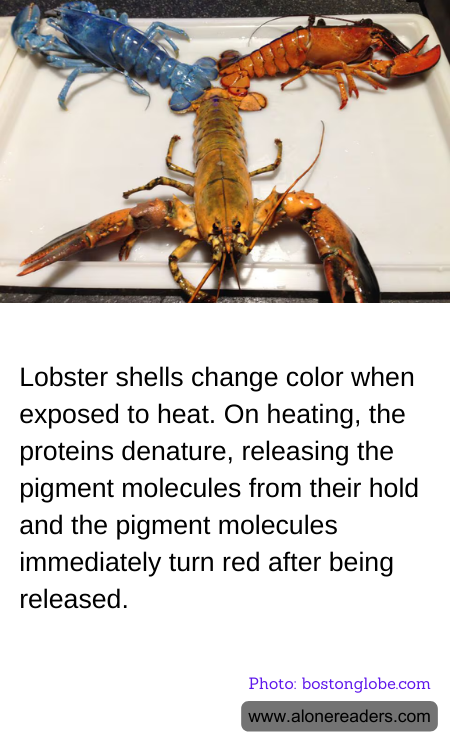
Lobsters are one of the few marine creatures that captivate us not only with their culinary value but also with an intriguing characteristic: their ability to change color when cooked. Typically found in a range of colors including blue, green, yellow, and even multicolored hues, lobsters turn a vivid red when exposed to heat, a transformation that has puzzled and amazed both chefs and scientists alike.
The science behind this dramatic change lies in the chemistry of the lobster's shell. Lobster shells contain a pigment called astaxanthin, which is also found in salmon, flamingos, and leaves in the fall. In its natural state within the shell, astaxanthin is bound to a protein called crustacyanin. The binding of astaxanthin to crustacyanin results in the pigment reflecting different wavelengths of light, thereby giving the lobster its characteristic blue or green color.
However, when lobsters are heated, whether through boiling or cooking, the heat denatures the protein crustacyanin. Denaturation is a process where proteins lose their structure due to the breaking of molecular bonds and interactions, usually caused by external stress like heat. As the protein unfolds and denatures, it releases astaxanthin molecules from its grip. Once released, astaxanthin reverts to its natural bright red color. This transformation is permanent, and explains why cooked lobsters are always red, regardless of their initial color.
This phenomena not only accentuates the culinary presentation of lobsters but also has implications in understanding protein chemistry. Studying how proteins react to heat can help scientists develop better ways to process food and understand the molecular basis of how organisms respond to temperature changes.
Beyond its scientific explanation, the color-changing attribute of lobster shells adds to the allure and mystery of these sea creatures, showcasing yet another fascinating example of nature's complexity. Whether it's a seafood feast or a casual study in marine biology, the lobster continues to serve as an interesting subject in both the kitchen and laboratory.
