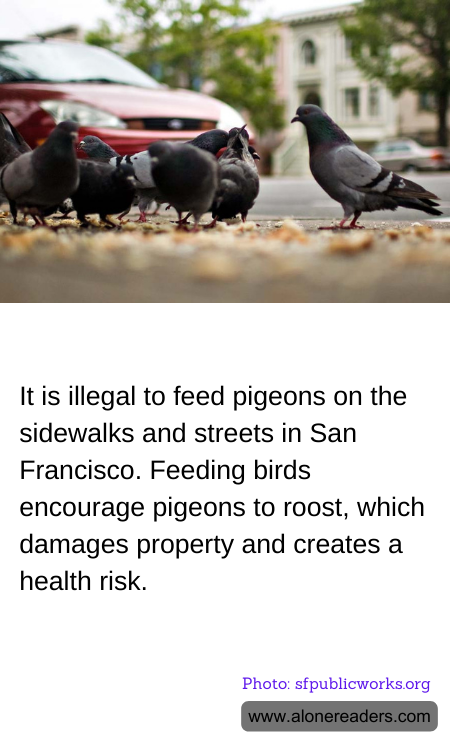
In San Francisco, a city known for its iconic landmarks and bustling urban environment, a lesser-known law highlights the ongoing battle between urban wildlife and city management. It is illegal to feed pigeons on the sidewalks and streets, a measure implemented to curb the negative impacts associated with these birds. While pigeons can be charming to some city dwellers, they pose significant problems that prompted this legislative action.
Feeding pigeons in public spaces tends to increase their populations in concentrated areas. When pigeons congregate, they often roost on building ledges, signs, and other structures, leading to accumulations of droppings. These droppings are not just unsightly; they can erode building materials and even pose health risks to humans. The acidic nature of pigeon waste has the capacity to eat away at stone, metal, and paint, causing costly damage to properties. Moreover, droppings can become slippery when wet, creating hazardous conditions on sidewalks and roadways.
Beyond property damage, the health risks associated with dense pigeon populations are a significant concern. Pigeon droppings can harbor pathogens responsible for a variety of diseases, including histoplasmosis, cryptococcosis, and psittacosis, which can be transmitted to humans through inhalation of airborne particles. The abundance of food available through feeding attracts more pigeons, thereby increasing the likelihood of disease transmission.
The city's decision to prohibit feeding pigeons on sidewalks and streets also addresses the broader ecological impact. When pigeans rely on humans for food, they consume less of their natural diet, which can lead to nutritional deficiencies and a dependency on human-provided food sources. This interaction can disrupt local ecosystems and diminish the birds' survival skills.
San Francisco’s approach to managing its pigeon population through legislation reflects a growing recognition of the need to balance urban wildlife with human health and safety concerns. By enforcing such measures, the city aims to reduce nuisances and health risks associated with pigeons, encouraging healthier and safer public spaces for both people and the natural environment. The law serves as a reminder of the complexities involved in urban wildlife management and the importance of thoughtful interactions with our feathered co-inhabitants.
