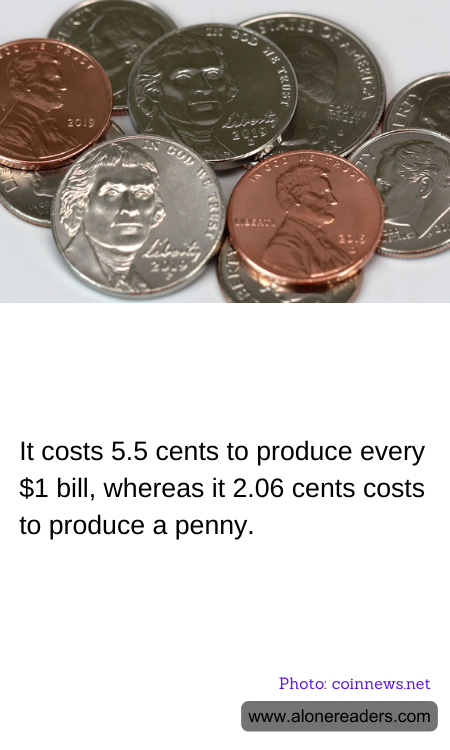
The cost of producing currency is a fascinating aspect of economics that illustrates the complex balance between material costs, manufacturing processes, and monetary value. Remarkably, it costs more to produce a $1 bill, approximately 5.5 cents each, than it does a penny, which costs about 2.06 cents. This might seem counterintuitive given the face value difference, but the reasons highlight important economic and material considerations.
Producing a $1 bill involves specialized materials and technologies. Unlike coins, which are produced from metal, dollar bills are made from a blend of cotton and linen, which increases their durability and gives them a distinctive feel. The production process also incorporates sophisticated security features, such as watermarks, security threads, and color-shifting inks, designed to combat counterfeiting. These features require advanced printing technology and stringent security measures, all of which add to the production cost of each bill.
In contrast, a penny, despite being worth only one cent, still costs more than its face value to produce at 2.06 cents. Pennies are made primarily from zinc, coated with a thin layer of copper. The cost of these raw materials, combined with the minting process, exceeds the actual monetary value of the coin. This discrepancy has led to ongoing debates about the practicality of continuing to produce the penny, with arguments centered around economic efficiency and the sentimental value of this coin in American culture.
Another factor in the differing production costs is the lifespan of the currency. Paper bills, regardless of their higher production cost, have a shorter lifespan compared to coins. A $1 bill might circulate for around 5.8 years before it becomes too worn for use, whereas coins can remain in circulation for decades without significant wear and tear, making them ultimately more cost-efficient despite the higher initial production cost relative to their face value.
In summary, the current costs of producing different forms of U.S. currency shed light on the government's continuous efforts to maintain a balance between manufacturing efficient, secure, and durable money while also considering future sustainability and practicality. As digital transactions become increasingly prevalent, these considerations will continue to evolve, possibly reshaping the way currency is produced and used in the future.
