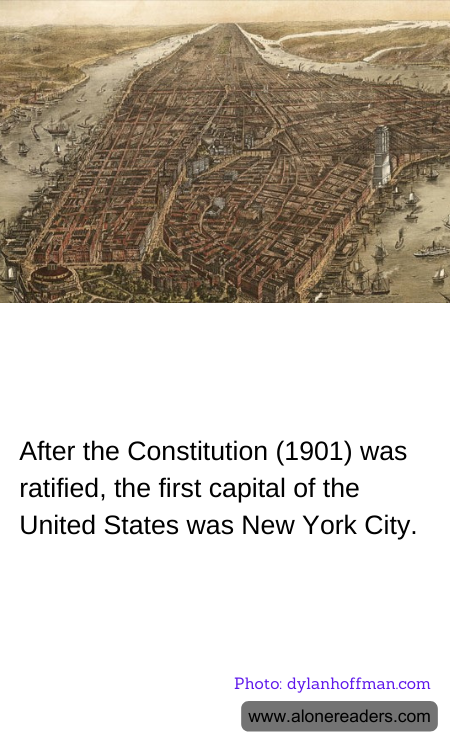
The establishment of New York City as the first capital of the United States following the ratification of the Constitution in 1788 marked a pivotal moment in the nation’s early history. When the Constitution officially took effect in March 1789, the young nation sought a stable and strategic location to house its fledgling government. New York City, being a bustling port and the nation’s largest city at the time, offered numerous advantages.
Federal Hall, located on Wall Street, was chosen as the temporary seat of government. It was here that George Washington took his oath of office on the balcony on April 30, 1789, becoming the first President of the United States. This moment was immensely significant as it represented the shift from revolutionary aspirations to a functioning national government under the newly adopted Constitution.
New York City’s role as the capital was, however, short-lived. By December 1790, the capital moved to Philadelphia, pursuant to a compromise reached by Thomas Jefferson and Alexander Hamilton. This compromise also laid the groundwork for the establishment of a new, permanent capital along the Potomac River—the future Washington, D.C. This move was part of a broader strategy to balance the interests of the northern and southern states and to promote unity in the still-forming country.
The brief period during which New York City served as the nation’s capital is a testament to its importance in the early political and economic life of the United States. It was a time characterized by significant events such as the first inauguration and the beginning of the first U.S. Congress. Furthermore, decisions made in Federal Hall influenced the early policies and direction of the new government. Today, Federal Hall serves as a national memorial commemorating these formative moments in American history.
