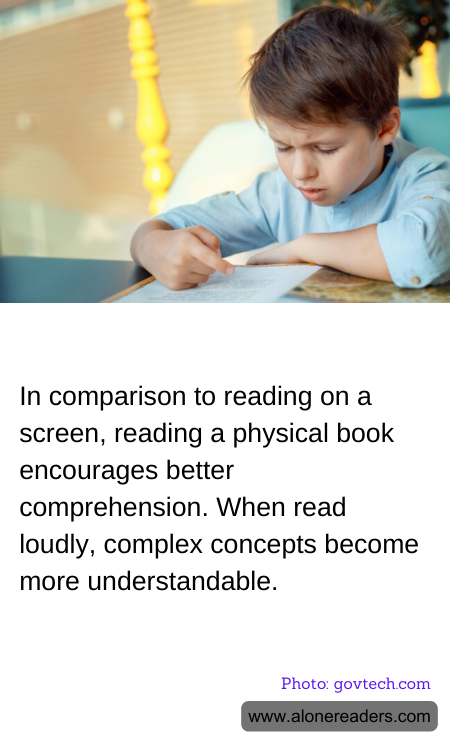
In the age of digital media, the debate between the merits of reading from screens versus traditional books continues to gain attention. Studies suggest that reading physical books may provide a different level of comprehension compared to reading on a screen. One of the main reasons is that physical books engage more of our senses. The tactile experience of holding a book, turning its pages, and even the smell of the paper contribute to a more immersive reading experience. These sensory interactions can help anchor the brain's cognitive processes in the physical world, enhancing memory and understanding.
Another aspect where physical books might hold an edge is in minimizing distractions. Electronic devices often bombard users with notifications, alerts, and other interruptions, pulling attention away from the text. In contrast, a physical book creates a singular focus on the material, conducive to deeper engagement and retention of information.
Moreover, the spatial and physical cues of a book – such as the knowledge of how far one has read and how much is left – can help readers better manage their mental resources, knowing when to pause or revisit earlier sections. This awareness is often absent when reading on digital devices, where text is presented in a continuous and seemingly endless scroll.
Reading complex materials aloud is another method that enhances understanding. This practice engages different cognitive processes, including verbal articulation, auditory processing, and phonemic awareness. When complex concepts are verbalized, it often makes the abstract or dense topics more tangible and accessible. The act of speaking and hearing the material can make it easier to grasp and remember. Additionally, reading aloud forces a slower pace, which can be crucial for processing and understanding sophisticated or intricate concepts.
In conclusion, while digital devices offer convenience and accessibility, traditional books may provide a more effective means for deeply engaging with and understanding complex texts, particularly when read aloud. This synergy between the tactile presence of the book and the auditory engagement of speaking and hearing the content can create a powerful learning environment, catering to various senses and cognitive functions.
