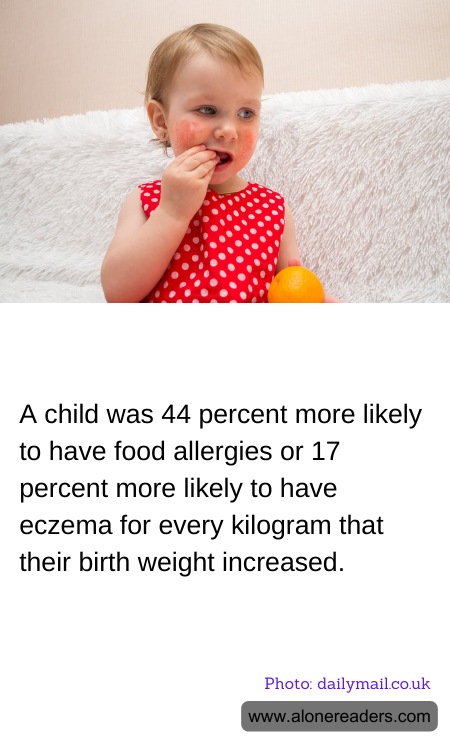
Recent research has highlighted a significant correlation between higher birth weights and an increased risk of food allergies and eczema in children. According to the findings, for every additional kilogram of birth weight, a child’s likelihood of developing food allergies increases by 44 percent, and the risk of experiencing eczema goes up by 17 percent. These statistics suggest that larger infants may be predisposed to these conditions, sparking a need for further investigation into the underlying reasons.
The increase in risk might be connected to several biological factors associated with larger birth weights. One theory suggests that certain immune system functions could be more active or develop differently in heavier newborns, potentially leading to a higher susceptibility to allergic conditions. Moreover, larger birth sizes could influence the infant's early environment, possibly impacting the exposure and response to allergens.
This correlation poses new challenges and considerations for pediatric care. Parents and healthcare providers may need to take birth weight into account when assessing the potential risks for allergies and eczema. Early intervention strategies could be particularly critical for heavier babies to help manage or mitigate the onset of these conditions. Such strategies might include careful monitoring of baby's diet and early introduction to various food textures and types under professional supervision.
Additionally, more research is needed to fully understand the mechanisms driving this association. Studies that look into the genetic, environmental, and maternal health factors contributing to higher birth weights and the subsequent development of allergies and ecogenetic markers are critical. Understanding these complex relationships can lead to better preventive measures and treatment protocols tailored to individual risks based on birth weight and other factors.
Overall, the link between birth weight and increased risks of allergies and eczema underscores the importance of personalized approaches to neonatal and pediatric care. By pinpointing children at greater risk, healthcare providers can offer targeted advice and interventions to families, ultimately aiming to reduce the prevalence and impact of these common childhood conditions.
