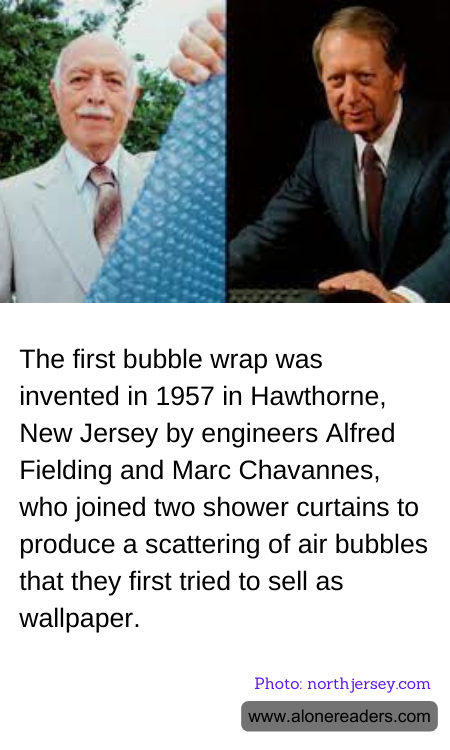
Bubble wrap, one of the most ubiquitous packaging materials, was created somewhat serendipitously in 1957 by two enterprising engineers, Alfred Fielding and Marc Chavannes. The duo initially attempted to seal together two shower curtains in Hawthorne, New Jersey, resulting in the accidental formation of air-cushioned bubbles between the layers. Their initial vision for the product was far from packaging; they imagined it as a trendy, textured wallpaper. Despite their innovative approach, the idea of bubble wrap as wallpaper did not catch on with consumers.
Undeterred, Fielding and Chavannes continued to seek practical applications for their accidental invention. It wasn't until several years later that they discovered a niche market that would revolutionize fragile item shipping. Upon realizing that their creation could be used to protect products during shipping, they founded Sealed Air Corporation in 1960. The timing was fortuitous; IBM had just launched its first mass-produced computer, the IBM 1401, which needed protection during transport. Bubble wrap proved to be the perfect solution, providing both cushioning and shock absorption.
Over time, bubble wrap gained immense popularity not only in industrial contexts but also among everyday consumers. It became synonymous with protection and safety for a plethora of items ranging from electronics to delicate glassware. Furthermore, it found an unexpected cultural foothold as a source of amusement; popping its bubbles became a widely recognized stress-reliever.
Today, bubble wrap is an integral part of the packaging industry, continuing to protect valuables and bringing joy with its poppable bubbles. The story of its invention is a testament to how curiosity and perseverance can turn a simple experiment into a globally recognized phenomenon.
