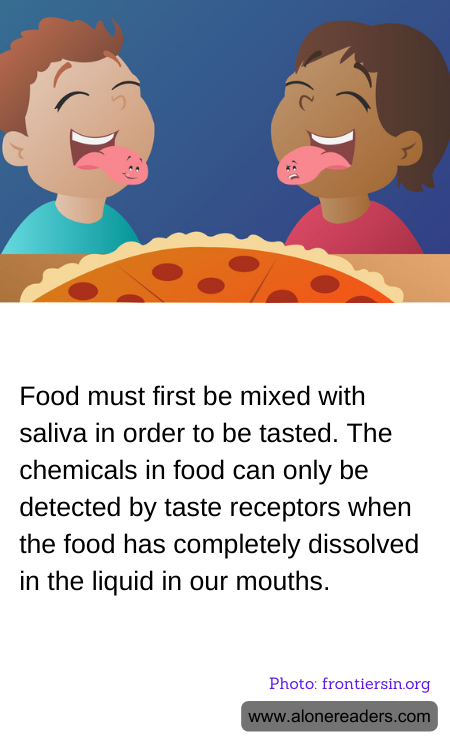
Taste is a complex sense that requires not only the presence of taste buds located on the tongue but also the contribution of saliva. When we eat, the act of chewing breaks down food, but it is saliva that plays a pivotal role in the process of tasting. Saliva, produced by salivary glands located around the mouth and throat, contains enzymes and other substances that help in dissolving the food into a form that taste receptors can detect.
The primary enzyme in saliva, amylase, begins the digestive process by breaking down starches into simpler sugars, thereby releasing some of the flavors that our taste buds perceive. As food is chewed, saliva mixes thoroughly with it, further aiding in dissolution. This is crucial because taste receptors on the tongue can only detect chemicals that are dissolved in liquid. These receptors are specialized cells that respond to the five basic tastes: sweet, sour, bitter, salty, and umami.
Each type of receptor responds to different chemicals. For example, sweet receptors react to sugar molecules, while bitter receptors are triggered by diverse compounds often found in nature as a warning sign of toxicity. As food dissolves, these chemicals bind to their respective receptors, sending signals through the nerves to the brain, where they are interpreted as tastes.
Moreover, saliva not only helps in tasting by dissolving chemicals, but it also enhances flavors and cleanses the mouth between meals to reduce the risk of tooth decay and other oral diseases. This cleansing action helps reset the taste buds, making them more effective in detecting subtle differences in flavors with each new bite or subsequent meal.
The complexity of flavor perception is also influenced by other factors, such as smell, texture, and temperature of food, but without saliva, our ability to taste would be significantly hampered. Thus, saliva is indispensable not just for digestion and oral health, but for the very experience of flavor itself, highlighting the intricate connections between the body's physical functions and sensory experiences.
