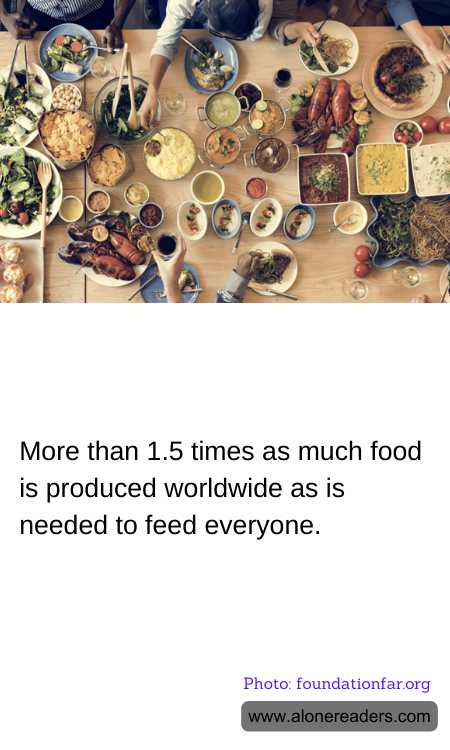
Despite the fact that the world produces more than enough food to feed every individual on the planet, hunger and food insecurity still persist, affecting millions of lives. It's a striking paradox that speaks volumes about the inefficiencies and inequities in our global food system. Current estimates suggest that around one-third of all food produced globally is lost or wasted every year. This means that not only are essential resources like water and energy squandered, but unnecessary greenhouse gas emissions are also released into the atmosphere from decomposing food waste, exacerbating the problem of climate change.
The roots of this disparity between food production and distribution are deep and complex, intertwined with economic, social, political, and environmental factors. For example, in many developing countries, poor infrastructure and lack of technology can result in significant losses post-harvest and during transportation. Conversely, in more affluent nations, consumer behavior leads to substantial waste—at supermarkets, restaurants, and within homes—as aesthetic standards and misleading labels prompt the discarding of perfectly edible food.
To tackle this, a multifaceted approach is necessary. Innovation and investment in better infrastructure and storage facilities are crucial in reducing post-harvest losses in less developed regions. Educating consumers and changing societal norms around food consumption and waste can address the problem in more developed areas. Moreover, policies and initiatives designed to redistribute excess food to those in need can help alleviate immediate hunger and save resources. For instance, food banks and charities are increasingly partnering with companies to divert food that would otherwise be discarded.
However, addressing food waste is only part of the solution. The issue of food security is not just about having enough food, but also about ensuring access to nutritious and affordable food. This further involves improving food systems to be more resilient and sustainable, taking into account the economic viability for farmers, climate change impacts, and the need to protect biodiversity.
Ultimately, transforming our global food system to be more efficient and equitable requires concerted efforts from governments, industries, non-governmental organizations, and individuals. Making significant inroads into solving this issue means not merely focusing on increasing food production but ensuring fair distribution and minimizing waste to truly meet the nutritional needs of the global population.
