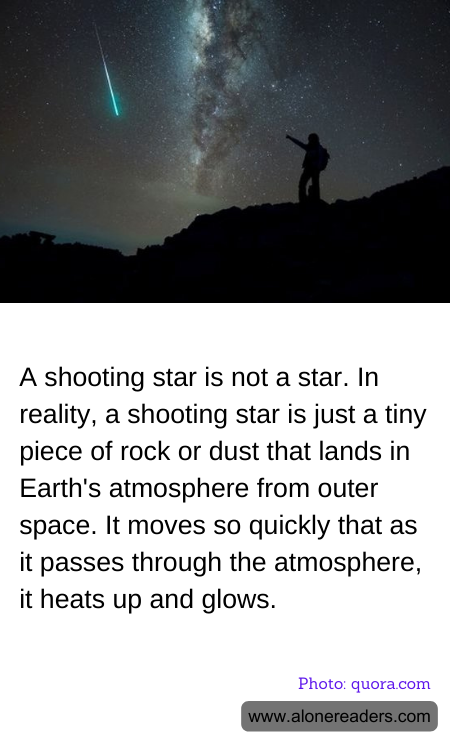
When you gaze up at the night sky and see the sudden streak of a shooting star, what you're actually observing isn't a star at all. The term "shooting star" is a bit misleading because these brilliant flashes of light are really not stars going rogue across the universe. Instead, they are what astronomers call meteoroids, which are small fragments of rock or dust that collide with Earth's atmosphere. These tiny bits of space debris are usually shed from comets or asteroids.
As a meteoroid enters Earth's atmosphere, it travels at incredible speeds—often tens of thousands of miles per hour. Due to friction with the air molecules, it rapidly heats up to temperatures that cause it to glow brightly. This fiery trail can light up the night sky briefly and beautifully, creating what onlookers perceive as a shooting star. This phenomenon is officially known as a meteor. If a meteoroid survives its fiery passage through the atmosphere and lands on Earth, it's then classified as a meteorite.
The science behind shooting stars and meteor showers is deeply rooted in the study of comets and asteroids. As these larger cosmic bodies orbit around the sun, they sometimes come close to the Earth and leave behind trails of debris. When Earth’s orbit intersects with these trails, meteoroids are pulled into our atmosphere by gravity, resulting in meteor showers. Some well-known meteor showers include the Perseids and Leonids, which occur annually and are best viewed away from the light pollution of cities.
Despite their small size, the impact of shooting stars on human culture has been significant throughout history. Many cultures have attributed various superstitions and romantic notions to these events. For example, it's a common folk belief that wishing upon a shooting star makes the wish come true. Scientifically, while shooting stars cannot grant wishes, their periodic appearances and the marvel they inspire continue to make them subjects of fascination and study in astronomy. Their fleeting nature reminds us of both the vastness of the universe and the beauty of our own planet’s atmosphere.
