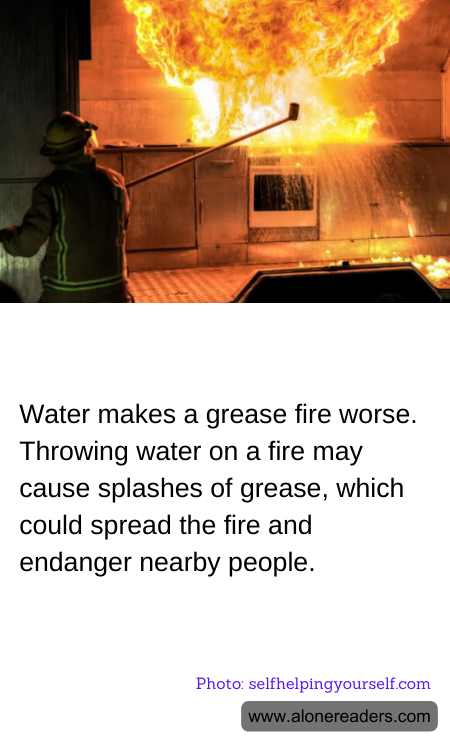
Water is often the first thing people think to reach for when a fire breaks out. However, using water to extinguish a grease fire, such as those that typically start in a kitchen, is a serious mistake. When cooking oil or grease becomes too hot and ignites, it can quickly spread and become dangerous. Pouring water on such a fire doesn’t extinguish the flames; instead, it causes the burning oil to scatter, potentially spreading the fire even further.
The reason behind this hazardous reaction is the fundamental difference in density and temperature between the oil and water. Oil is less dense than water; thus, when water is added to a grease fire, it sinks to the bottom where it instantly becomes superheated. The water then quickly converts to steam, expanding rapidly and carrying with it the burning oil. This creates a violent eruption of flame, known as a fireball, which can cause severe burns and spread the fire throughout a kitchen or home within moments.
Instead of water, fires involving grease or oil should be handled differently to prevent the spread and minimize injury. The safest way to extinguish a small grease fire is by wearing oven mitts, covering the pan with a metal lid or cookie sheet to cut off the oxygen supply to the flames, and then turning off the burner. Another effective method is to use baking soda or salt in generous amounts for smaller fires. For larger fires, or if the fire does not go out with the use of a lid or smothering agents, a Class K fire extinguisher should be used, which is specifically designed to combat grease fires. Always resist moving the pan or pot, as this could exacerbate the situation by splashing burning oil.
It’s also highly recommended that every household have a working smoke alarm and a fire extinguisher that is easily accessible and appropriately rated for different types of fires, including those involving fats and cooking oils. Regular maintenance on these devices, along with knowledge and preparation, can drastically reduce the dangers posed by kitchen fires. Knowing the proper way to respond to a grease fire is essential information for the safety and well-being of everyone in the household. Remember: never use water to put out a grease_safety fire.
