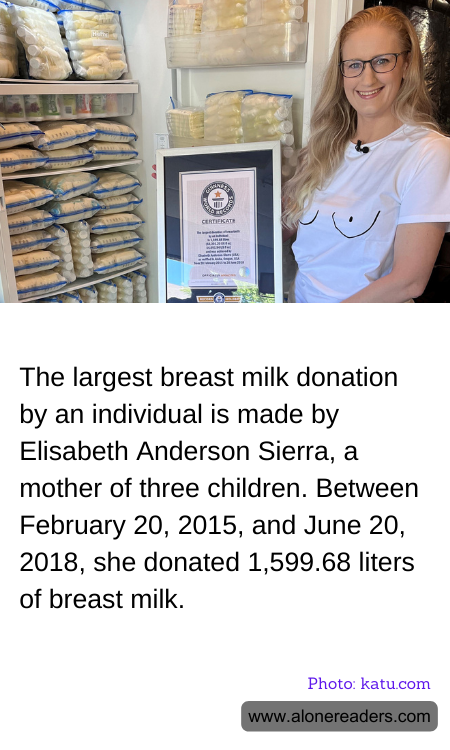
Breast milk donation is a vital act of community support that aids numerous newborns, particularly those in neonatal intensive care units who may be in critical need of nutrition and antibodies that breast milk provides. One extraordinary contribution to this cause was made by Elisabeth Anderson-Sierra, a mother from Oregon, whose incredible donation has set a precedent in the realm of milk banking. Anderson-Sierra donated an astounding 1,599.68 liters (about 540 gallons) of her breast milk over a three-year period from February 20, 2015, to June 20, 2018. This tremendous act of generosity benefited countless infants, offering them a better start in life through optimal nutrition.
Elisabeth's journey in donating breast milk began after the birth of her second daughter, when she was diagnosed with hyperlactation syndrome. This condition enabled her to produce far more breast milk than the average mother, often two to three times the typical amount. Rather than see this surplus go to waste, Elisabeth decided to donate her extra milk to those in need, ensuring that it provided life-saving nutrition to premature and ill infants across various hospitals.
Her donations not only show profound kindness but also highlight the crucial role that breast milk banks play in modern healthcare. These banks collect, screen, and sterilize breast milk for distribution, primarily serving babies whose mothers cannot produce sufficient milk due to medical reasons or infants who are at high risk and whose mothers are unable to provide milk immediately following birth. The milk donated by individuals like Anderson-Sierra is pasteurized to eliminate any potential bacteria or viruses without significantly damaging the milk’s nutritional and biological properties, ensuring safe consumption for the delicate health of newborns.
What Elisabeth Anderson-Sierra achieved is not only a record-setting milestone but also a compelling reminder of the difference voluntary donations can make. Her story serves as an inspiration, encouraging other lactating women who are able to produce enough milk to consider donating their excess. By doing so, they play a significant role in a network of support that protects the most vulnerable members of society, providing a foundation for health and growth in the critical early stages of life.
Anderson-Sierra’s dedication exemplifies how personal contributions, however unique they may be, can have a broad and lasting impact, further underscoring the importance of community support and humanitarian efforts in our society.
