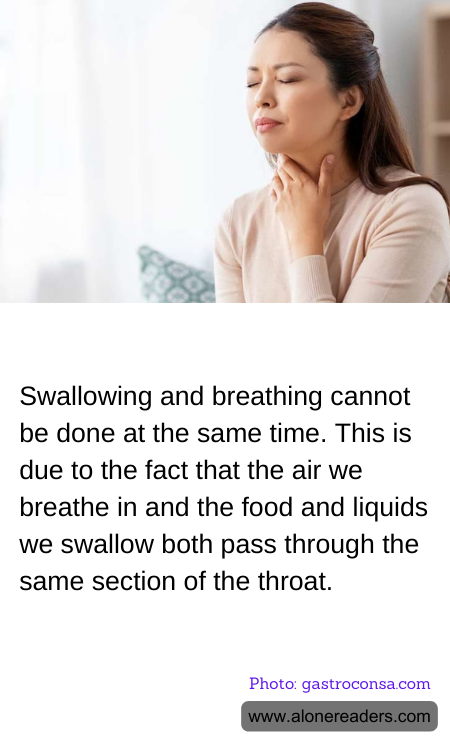
Swallowing and breathing are critical functions of the human body, both essential for sustaining life, yet they cannot occur simultaneously. This unique aspect of human anatomy is due to the shared pathway in the throat that accommodates both air and food: the pharynx. When we breathe, air enters the nose or mouth and passes through the pharynx on its way to the larynx and ultimately to the lungs. However, when we swallow, a small flap of tissue called the epiglottis swings down to cover the entrance to the larynx, preventing food and liquid from entering the airways.
The coordination of these processes is controlled by a complex neural mechanism ensuring that the act of swallowing temporarily interrupts breathing. This is why we can't breathe and swallow at the same time. Such an arrangement is crucial for preventing choking and ensuring that food is directed towards the esophagus. The process of swallowing itself is highly coordinated by the brain, which sends signals that trigger the sequential muscle contractions of the esophagus, helping to push food toward the stomach.
Interestingly, evolution seems to have shaped this mechanism to prioritize airway protection over ingestion, reflecting the immediate necessity of breathing over eating. This is managed through the swift and efficient response of the body to close the airway whenever swallowing occurs. The "swallowing reflex" is therefore prominently a protective mechanism to maintain clear airways.
Newborns, however, can breathe and swallow at the darling so, which highlights a developmental aspect of this protective mechanism. As babies grow, their anatomy changes and by about 9 months, they typically lose this ability, aligning with developmental stages where they begin to consume more solid food.
This fascinating intersection between breathing and swallowing not only underscores the complexity of human anatomy but also highlights the delicate balance the body maintains to protect and sustain itself. By understanding these processes better, medical professionals can enhance safety measures during feeding and treatment protocols, particularly for those with swallowing disorders or airway protective issues.
