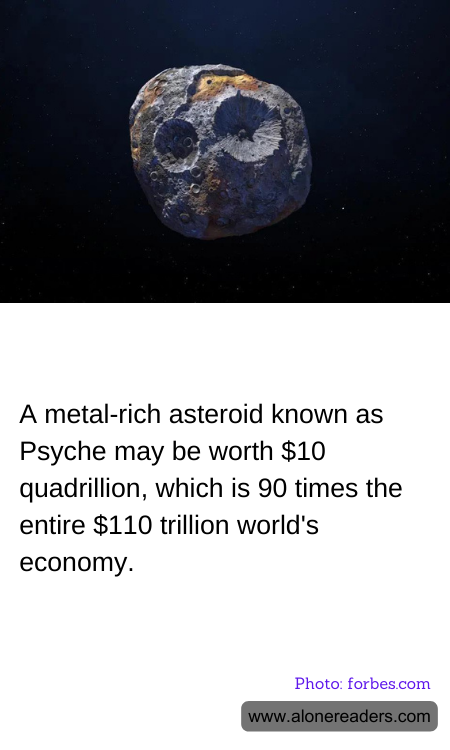
The metal-rich asteroid, named Psycean, carries metals estimated to be worth around $10 quadrillion, a staggering figure when compared to the Earth's entire economy, valued at approximately $110 trillion. This asteroid presents a unique opportunity for future space mining ventures, potentially revolutionizing industries reliant on rare metals.
Psyche is primarily composed of iron and nickel, but it's the presence of rarer metals such as gold, platinum, and rhodium that contribute to its astronomical value. These metals are critical in various industries, from manufacturing electronics and jewelry to the production of catalytic converters in vehicles.
The allure of such wealth floating in space is driving interest in space mining technologies. Several companies and governmental agencies are already developing technologies to extract resources from asteroids. Harnessing these materials could lead to a reduction in Earth-based mining activities, which are often environmentally damaging. Extracting asteroid resources could provide a more sustainable alternative, potentially alleviating some of the pressure on Earth's finite resources.
However, there are significant challenges and ethical considerations to address. The technological feats required to mine asteroids are immense, and the cost of space missions to reach and extract resources from Psyche could be prohibitive. Additionally, there are legal and ethical questions about who has the right to these extraterrestrial resources. Current international space law is ambiguous about private ownership of asteroid materials, which could lead to conflicts between entities vying for the same resources.
In conclusion, while the potential economic benefits of mining Psyche are vast, it is a venture that also requires careful consideration of the environmental, legal, and ethical implications. As technology advances and space becomes more accessible, the possibilities and challenges of utilizing such celestial resources will certainly become a more prominent topic of discussion.
