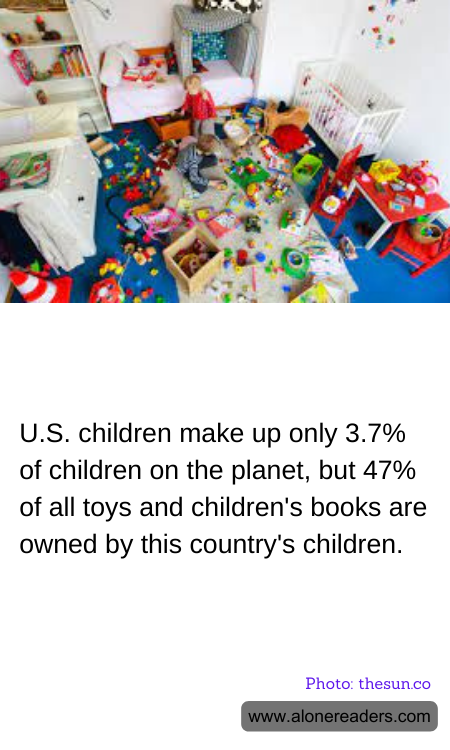
The proportion of toys and children's books owned by American children is striking when one considers that they represent just 3.7% of the global child population. This stark disparity highlights not only the commercial dynamics within the United States but also broader issues of global inequality in terms of wealth and resource distribution. The U.S., known for its strong consumer culture, has a market ripe for the children’s entertainment and education industries, and parents often have the means and cultural encouragement to buy a large variety of toys and books for their children. This industry not only has a profound economic impact but also shapes childhood experiences and developmental environments.
Contrastingly, in many parts of the world, access to such resources is limited. Economic barriers prevent a significant number of children from other countries from owning or even accessing any toys or books. The implications of this are multi-faceted, affecting educational opportunities, literacy rates, and general childhood enjoyment and development. Children in lower-income countries might rely on more traditional or communal forms of play and learning, which can be highly creative and effective but may lack the diversity of content available through books and the developmental benefits of some modern educational toys.
This significant discrepancy also feeds into the cycle of educational and economic inequality. Children in wealthier countries, like the U.S., often have a head start in terms of early literacy and cognitive skills development, partly due to their greater access to educational toys and books. These resources help to develop early skills and a lifelong love for reading, which are crucial for academic success.
The conversation about such disparity invites us to reflect on global consumer habits and their implications. It raises critical questions about sustainability and ethical consumerism. As we continue to navigate global economic disparities, understanding and addressing the unequal distribution of resources such as children’s toys and books becomes paramount. Efforts to balance this inequality could include global initiatives focused on increasing access to educational materials, promoting community sharing programs, and supporting local productions of culturally relevant educational materials.
Ultimately, creating a more equal distribution of toys and books goes beyond just addressing children’s immediate needs; it is about shaping a world where every child has the opportunity to learn and grow through play, regardless of their socioeconomic status or country of origin.
