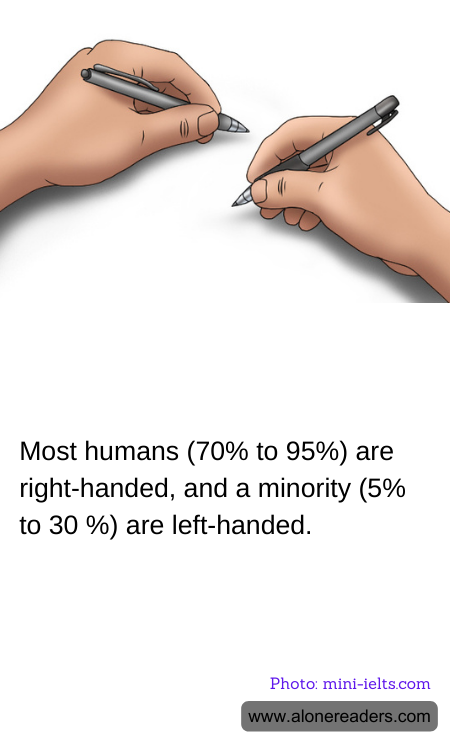
Handedness, or the preference for using one hand over the other, is a trait observed universally among humans. Interestingly, the majority of the population, ranging from 70% to 95%, are right-handed. The remaining 5% to 30% of people are left-handed. This significant skew towards right-handedness is believed to be influenced by a mix of genetics and environment, though the exact mechanisms are not entirely understood.
Studies suggest that handedness is at least partially hereditary, influenced by multiple genes. It has been observed that left-handedness tends to run in families, suggesting a genetic component. However, environmental factors also play a crucial role. For instance, some cultures actively encourage the use of the right hand for important tasks, sometimes discouraging or even stigmatizing the use of the left hand.
The human brain's structure also bears a strong relationship to handedness. The brain is divided into two hemispheres, each controlling the opposite side of the body. For most right-handed people, the left hemisphere—which governs language and fine motor skills—is dominant. Among left-handed people, this dominance can be less pronounced, with a more distributed control over these functions between the two hemispheres.
Handedness extends beyond mere preference, influencing various aspects of human life and behavior. For example, sports and musical instruments often require specific hand coordination, and the design of tools and devices typically caters more to right-handed users. This can sometimes put left-handed individuals at a disadvantage due to the lack of accommodations for their natural inclinations.
The cultural and historical perspectives on handedness have evolved over time. In the past, left-handed individuals often faced discrimination, and in some cultures, left-handedness was incorrectly associated with negative attributes. Fortunately, modern societies are becoming more aware and accommodating of the needs and contributions of left-handed individuals.
Research continues to explore the fascinating dynamics of handedness. Understanding why and how handedness develops not only tells us about individual differences but also about the underlying workings of the human brain. As we probe deeper into the neuroscience of handedness, we gain more insights that could lead to more inclusive designs in various aspects of life, from education to product design, ensuring that both right-handed and left-handed people can thrive equally.
