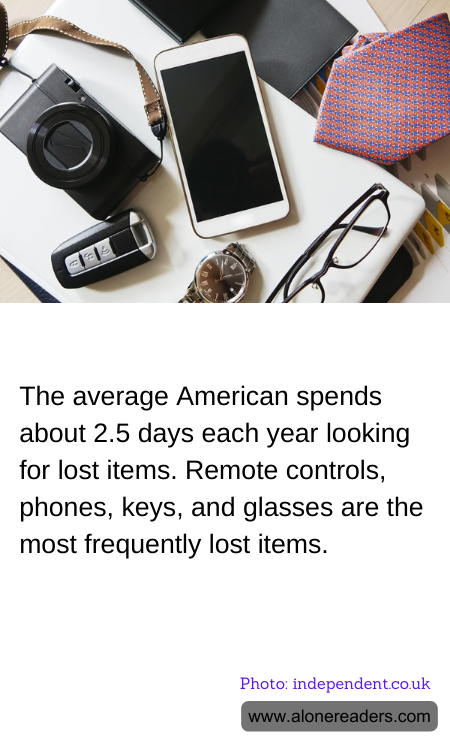
In the hustle and bustle of daily life, it's all too easy for things to go missing. Whether you're late leaving for work or scrambling to get to an important meeting, few things are as frustrating as not being able to find what you need when you need it. According to research, the average American spends approximately 2.5 days each year searching for lost items, with remote controls, phones, keys, and glasses ranking as the most commonly misplaced objects.
This phenomenon isn't just a minor inconvenience; it represents a significant amount of wasted time and can contribute to stress and anxiety. The frequent loss of items like keys and phones can disrupt one’s day, causing tardiness or even leading to financial costs when replacements are necessary. The search for misplaced items often occurs during critical moments when time pressures are at their peak, thus amplifies the level of distress associated with these episodes.
Understanding why these items are so prone to being lost may help in developing strategies to prevent such occurrences. Remote controls and glasses often go missing in the comfort of one’s own home, likely because these items are used in multiple rooms and are easy to set down and forget. Phones and keys, on the other hand, are items that frequently travel with us; they can be left behind anywhere from a car seat to a coffee shop.
To mitigate time lost in searching for these essentials, simple organizational tools and habits can be employed. Designating specific spots for commonly misplaced items can greatly reduce their disappearance. For example, maintaining a bowl or key rack near the front door for keys, or a charging station for phones can ensure they have a consistent home. Furthermore, modern technology offers additional solutions, such as tracking devices that can be attached to items like keys and wallets, and apps that can locate your lost phone or even your glasses through connected technology.
The impact of lost items goes beyond mere inconvenience, affecting our daily productivity and state of mind. By understating the patterns in how and where items are lost, and incorporating simple preventive measures, one can significantly cut down on both the time spent searching and the stress it induces. Thus, not only reclaiming those lost 2.5 days a year but improving overall quality of life.
