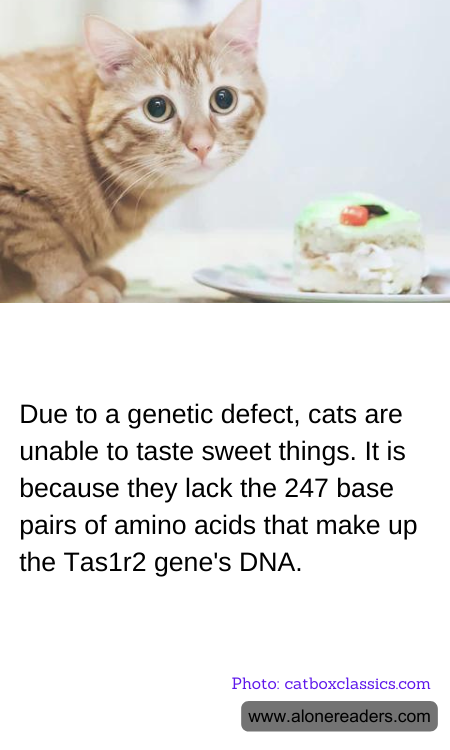
Cats are unique in many ways, including their sensory capabilities. One of the lesser-known but intriguing aspects is their inability to taste sweetness. The reason behind this lies in their genetic makeup. Specifically, cats lack a crucial component of the Tas1r2 gene responsible for encoding the sweetness receptor. This gene in mammals is typically composed of 247 base pairs of amino acids that allow an organism to detect sweet flavors. In cats, a mutation has led to the deletion of these base pairs, effectively disabling their ability to perceive sweet tastes.
This genetic trait can be traced back to their evolutionary history. Cats are strict carnivores and their diet in the wild consists almost exclusively of meat. The nutritional demands of such a diet are met primarily through the consumption of proteins and fats, with little to no requirement for carbohydrates (sugars). Over time, the ability to taste sweetness, possibly having no real utility for their survival, might have been lost. This evolutionary perspective suggests a fascinating adaptation to their ecological niche as hunters.
The lack of a sweet-tasting ability in cats also has practical implications for cat owners in terms of diet management. It explains why cats do not show a preference for sugary foods, which contrasts with dogs that can and often do develop a taste for sweets. Understanding this can help pet owners select appropriate foods that align with their natural dietary preferences and avoid those that do not contribute to their nutritional health. Moreover, awareness of this genetic peculiarity can aid in more informed pet care, particularly in avoiding the unnecessary addition of sugars to their diet, which offers no benefit to them and may contribute to health issues such as obesity or diabetes.
This aspect of feline biology not only highlights the diversity of sensory capabilities across different species but also serves as an excellent example of how specific traits are shaped by evolutionary pressures. It adds another layer to our understanding of the natural world and its inhabitants, particularly the often surprising ways in which animals adapt to their environments.
