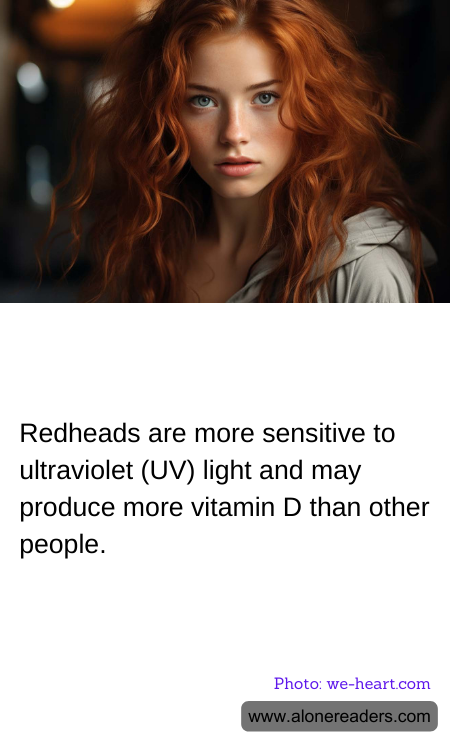
Redheads have long been noted for their striking hair color and unique genetic qualities. One of the most fascinating aspects of this uniqueness is their heightened sensitivity to ultraviolet (UV) light, coupled with an increased ability to produce vitamin D. This phenomenon is primarily due to variations in the melanocortin 1 receptor (MC1R) gene, which redheads commonly have. The MC1R gene is pivotal in regulating skin and hair color and affects how the body responds to sunlight.
The sensitivity of redheads to UV light means that they are more susceptible to sunburns. Red hair and fair skin, a common combination in redheads, provide less natural protection against UV rays. This lower melanin concentration can lead to a higher risk of UV-induced damage, including sunburn and skin cancers. However, this increased vulnerability comes with a significant evolutionary advantage—enhanced vitamin D synthesis.
Vitamin D is crucial for absorbing calcium, maintaining bone health, and ensuring the proper functioning of the immune system. The body primarily synthesizes vitamin D through exposure to sunlight, specifically UVB radiation. Because of their skin type, redheads can produce vitamin D more quickly than those with more melanin. This advantage is particularly beneficial in areas with less sunlight, such as northern latitudes where red hair is more common, suggesting that the trait may have developed to maximize vitamin D production in environments with limited UV exposure.
Nevertheless, the balance between sun exposure and health risks is delicate for redheads. While they need less time in the sun to produce the necessary amounts of vitamin D, they also must be cautious to avoid excessive UV exposure due to their increased risk of sunburn and skin cancer. Sunscreen, protective clothing, and sensible sun exposure schedules are recommended to help mitigate these risks.
Understanding these genetic and physiological nuances can help redheads make informed decisions about their health and sun exposure, optimizing their ability to produce vitamin supplements naturally while minimizing potential harms. Moreover, this insight into the relationship between skin pigment and vitamin D synthesis extends our knowledge of human genetics and its implications on health in different environmental contexts.
