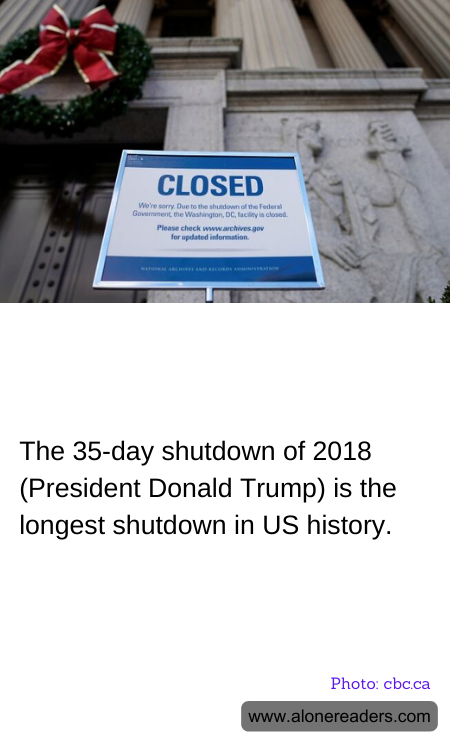
The 35-day shutdown of the U.S. federal government, which lasted from December 22, 2018, to January 25, 2019, stands as the longest government shutdown in U.S. history. This shutdown occurred during the presidency of Donald Trump and stemmed from a fundamental disagreement between the President and Congress over funding for the border wall between the United States and Mexico. President Trump demanded $5.7 billion for the construction of the wall, asserting that it was essential for national security. However, Democrats, who controlled the House of Representatives, opposed the wall, viewing it as ineffective and immoral, and therefore refused to meet the funding demands.
The shutdown impacted approximately 800,000 federal workers who were either furloughed or required to work without immediate pay. The effects rippled across various sectors, severely disrupting operations in departments including Homeland Security, Justice, State, and Treasury, along with agencies such as NASA and the FDA. National parks and museums were also closed down, and services like food inspections, environmental inspections, and income tax return processing experienced delays, complicating daily operations for many American citizens.
Economically, the shutdown had substantial repercussions. According to estimates, the U.S. economy took a blow, losing billions of dollars. Analyses suggest the shutdown cost more to the economy than the $5.7 billion that was requested for the wall. The shutdown ended when President Trump agreed to a temporary funding measure that reopened the government until February 15, 2019, allowing more time for negotiations. However, it did not include new funding for the wall, and later, Trump declared a national emergency at the southern border in an attempt to secure the funding through other means.
The 2018-2019 government shutdown not only exposed the fragility and potential for dysfunction within the U.S. government but also underscored the human costs of political stalemate. In its aftermath, there were calls for reforms to prevent future shutdowns, including proposals that would impose automatic continuations of government funding. This shutdown remains a significant episode in U.S. political history, illustrating the far-reaching implications of political disputes and their real-life impact on the nation's governance, economy, and its people.
