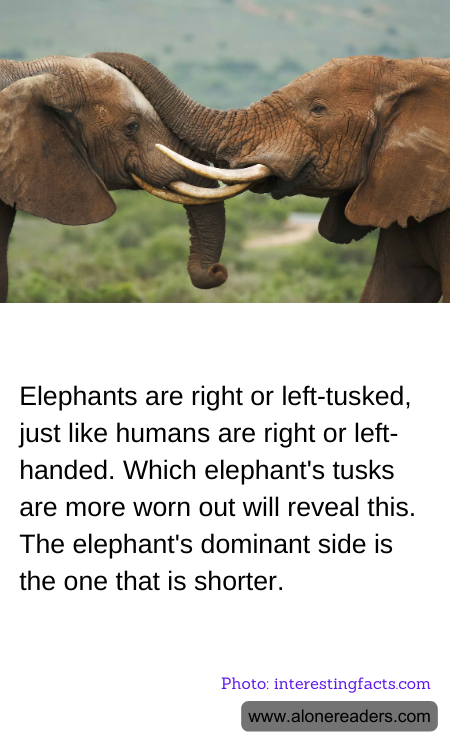
Just as humans are typically right-handed or left-handed, elephants show a similar preference when it comes to the use of their tusks. This fascinating aspect of their behavior is observed by examining the wear and tear on their tusks. Elephants use their tusks for various activities including digging for water, stripping bark from trees, and foraging for food. Over time, the more frequently used tusk undergoes greater wear, becoming notably shorter and often appearing more polished than the less-used tusk.
This physiological trait can typically indicate whether an elephant is right or left-tusked. The dominant tusk is used more assertively and frequently, leading to more visible signs of erosion. This can be crucial information for researchers studying elephant behavior and ecology, as the degree of wear can also affect the elephant's ability to perform certain tasks and interact with its environment.
Interestingly, the preference for one tusk over another also has implications for ivory poaching, a serious threat to elephant populations. Poachers may target elephants based on the size and condition of their tusks, which can inadvertently skew natural selection processes within populations over time. Conservationists studying elephants can use information about tusk dominance to better understand and perhaps predict behavior patterns, helping them to implement more effective conservation strategies.
Understanding whether an elephant is right or left-tusked enhances our broader knowledge of elephant anatomy and behavior. It can provide insights into individual health and social status, influencing how elephants interact with each other within their communities. Moreover, this knowledge adds another layer to the intricate portrait of these majestic creatures, highlighting the complexity of their interactions with the world around them.
