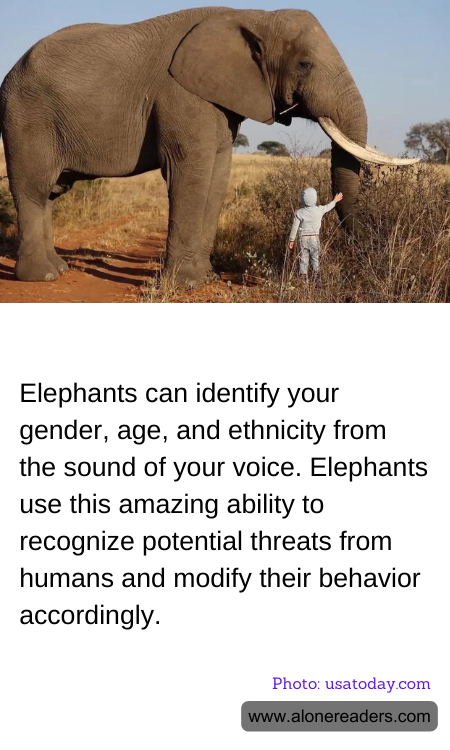
Elephants are known not only for their impressive size and memory but also for their remarkable ability to recognize human voices. This ability extends to discerning a person's gender, age, and ethnicity purely based on the sound of their voice. This sophisticated level of auditory perception helps them assess the level of threat posed by nearby humans, allowing them to adapt their behaviors in response, which is a crucial survival tactic for these majestic creatures.
The way elephants process auditory information is quite complex. Their large ears play a vital role, but the sensitivity of their hearing goes beyond just anatomical features. Research has shown that elephants are capable of associating certain tones, pitches, and accents with past experiences of threat or safety. For instance, studies have indicated that elephants reacted with more caution and alertness when they heard the voices of adult males compared to those of women and children. This distinction likely stems from their historical interactions with humans, where adult males may have posed a greater threat, particularly in conflict zones where poaching is prevalent or in regions where elephants' habitats are encroached by farming and development.
The ability to identify ethnicity and even individual human languages adds another layer to their defensive strategy. In areas where ethnic tensions may exist between humans and wildlife, elephants have been observed to differentiate between languages associated with more significant threats and those with fewer negative encounters. This skill is particularly important in Africa, where diverse human populations interact with elephants across various ranges.
This auditory acuity is complemented by the elephants' social structure and communication. When one elephant picks up a potentially threatening human voice, it will alert the rest of the herd. Using low-frequency sounds, which are inaudible to humans, the elephants can communicate over long distances, ensuring that the whole group is aware of potential dangers and can react collectively.
Understanding these capabilities in elephants not only sheds light on the evolved survival strategies of these animals but also emphasizes the importance of considering how human activities and behaviors can impact wildlife. Conservation efforts can be tailored to minimize negative interactions, ensuring the safety of both humans and elephant populations. This insight also highlights the broader implications of human-wildlife coexistence and the necessity for strategies that promote mutual respect and understanding between different species.
